Pesto vs. Chimichurri: Comparing Herb Sauces for Pasta, Meat, and More
Pesto and chimichurri are bright, herbal sauces with different uses. Learn differences, best pairings, and how to choose the right one for your dish.
Written by FoodieManiac
With over 8 years of sauce-making experience, I've tested hundreds of techniques and products to bring you practical, reliable advice. Learn more about me →
Pesto vs. Chimichurri: Comparing Herb Sauces for Pasta, Meat, and More
What Are Pesto and Chimichurri?
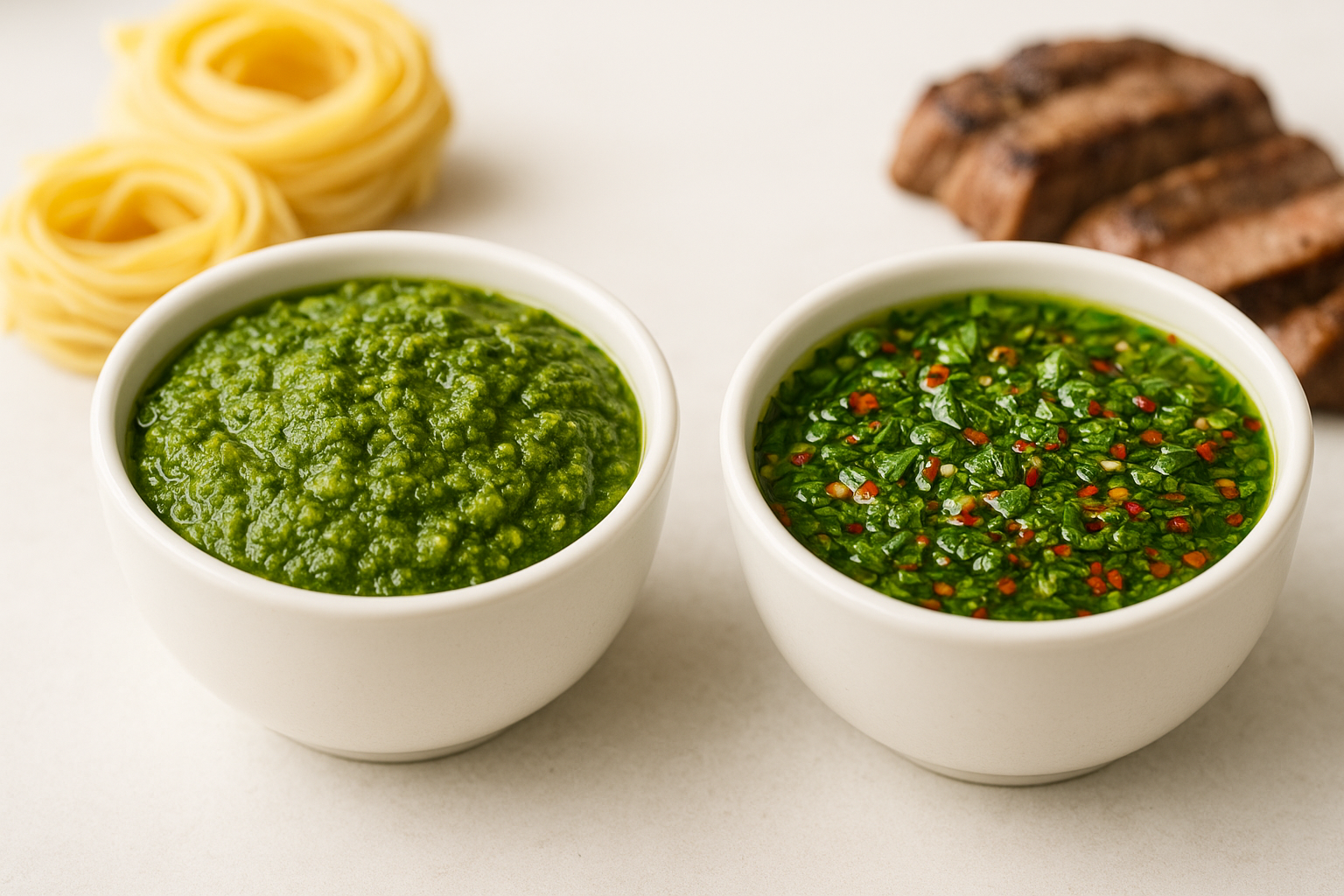
Pesto and chimichurri are both uncooked, herb-forward sauces with centuries of history in their respective cuisines. Pesto hails from the Liguria region of Italy, traditionally made with basil, pine nuts, garlic, Parmesan, and olive oil. Chimichurri is an Argentine (and Uruguayan) classic, built from parsley, oregano, garlic, olive oil, vinegar, and red pepper flakes. While both are green, fresh, and aromatic, they play very different roles in the kitchen.
Core Differences: Ingredients and Flavor Profiles
Pesto relies on sweet basil as its foundation, complemented by rich Parmesan and pine nuts for a creamy, slightly nutty, and umami-packed flavor. The olive oil in pesto is usually mild and fruity, and a touch of garlic sharpens the edge. For classic pesto Genovese, stick to these ratios for 4 servings:
- 2 cups (50g) fresh basil leaves, lightly packed
- 1/2 cup (120ml) extra-virgin olive oil
- 1/3 cup (35g) grated Parmesan cheese
- 1/4 cup (30g) pine nuts
- 2 medium garlic cloves
- 1/2 teaspoon kosher salt
Chimichurri is more acidic and brighter, with parsley and oregano as its base. It skips cheese and nuts altogether, instead relying on vinegar (typically red wine vinegar), garlic, and chili for a punchy, grassy, and slightly spicy profile. For a classic Argentine chimichurri (4 servings):
- 1 cup (25g) flat-leaf parsley, finely chopped
- 2 tablespoons fresh oregano, finely chopped (or 1 tbsp dried)
- 3–4 garlic cloves, minced
- 1/2 cup (120ml) extra-virgin olive oil
- 3 tablespoons (45ml) red wine vinegar
- 1 teaspoon red pepper flakes
- 3/4 teaspoon kosher salt
Unlike pesto, chimichurri is always dairy- and nut-free, making it accessible for more dietary restrictions.
How to Make Each Sauce Perfectly
Classic Pesto: Technique and Tips
The best pesto delivers a creamy yet textured sauce that clings to pasta or vegetables. Use a mortar and pestle for tradition, but a food processor works well for speed. Avoid overheating the basil - friction from blades can turn it bitter and dull.
Method (Food Processor):
- Add pine nuts and garlic to the processor; pulse 4–5 times.
- Add basil and salt; pulse until coarsely chopped (about 8–10 pulses).
- Add cheese and pulse 2–3 times more.
- With the machine running, drizzle in olive oil slowly until emulsified (about 30 seconds).
Use immediately, or store in an airtight jar with a thin layer of olive oil on top to prevent browning. Refrigerate up to 5 days, or freeze for up to 3 months.
For more on emulsification and why olive oil should be added slowly, see The Science of Emulsification: Why Some Sauces Come Together and Others Fall Apart.
Chimichurri: Balancing Herbs and Acidity
Chimichurri is always made by hand (never blended), to preserve its vibrant, rustic texture. Use a sharp knife for the parsley - chopping, not bruising.
Method:
- Finely chop parsley and oregano; place in a bowl.
- Add minced garlic, red pepper flakes, and salt; stir to combine.
- Add vinegar and olive oil; stir well.
- Let sit at least 30 minutes at room temperature for flavors to meld.
Chimichurri keeps well in the fridge for up to 1 week. Allow it to return to room temperature before serving, as olive oil solidifies when cold.
For an authentic step-by-step version, see our Authentic Argentine Chimichurri Sauce Recipe.
Best Uses: Pasta, Meat, Vegetables, and More
Pasta Pairings: Why Pesto Shines
Pesto’s creamy, nutty, and aromatic profile is tailor-made for pasta. Toss 1 pound (450g) of hot, drained pasta with 1/2 cup (120ml) pesto and 2–4 tablespoons of reserved pasta cooking water. The starch in the water helps the sauce emulsify and coat each noodle. Serve immediately; pesto loses its vibrancy if heated above 180°F (82°C).
For more pasta sauce inspiration, check out Best Sauces for Pasta: 12 Homemade Recipes for Every Noodle.
Grilled and Roasted Meats: Chimichurri’s Moment
Chimichurri is the ultimate sauce for grilled beef, pork, chicken, or lamb. Its acidity and herbs cut through fat and char, making it ideal for steaks (especially ribeye or sirloin cooked to 130–135°F/54–57°C). Spoon chimichurri over just-rested meat, or use as a marinade for 30–60 minutes before grilling. Avoid marinating for longer than 2 hours - high acidity can toughen proteins.
For more ideas on pairing sauces with steak, visit Best Sauces for Steak: 13 Recipes Worth the Good Cut.
Vegetable Dishes: Versatility and Techniques
Both sauces can upgrade roasted or grilled vegetables. Toss hot roasted carrots, potatoes, asparagus, or grilled zucchini with 2–3 tablespoons of pesto or chimichurri per pound of vegetables. Pesto is best stirred through vegetables before serving, while chimichurri can be spooned on top or served alongside.
For more on vegetable pairings, see Best Sauces for Roasted Vegetables: 12 Pairings That Add Big Flavor.
Sandwiches, Eggs, and More
Spread pesto on crusty bread with mozzarella and tomato for a classic Italian panino, or swirl it into scrambled eggs at the end of cooking for a burst of color and complexity. Chimichurri makes an excellent drizzle for fried eggs, avocado toast, or as a finishing touch on grain bowls and salads.
For a creamy, herby dressing alternative, try Thermomix Green Goddess Dressing.
Technical Tips: Getting the Best Flavor and Texture
Pesto: Preventing Bitterness and Browning
- Use fresh, young basil: Older leaves can be bitter. Avoid basil that is flowering or wilting.
- Add oil in a thin stream: This prevents separation and creates a stable emulsion. For a food processor, add oil over 20–30 seconds with the machine running.
- Don’t overprocess: Stop as soon as the mixture is cohesive but flecked with green. Over-blending can make the sauce dull.
- Cover with oil for storage: A thin layer of olive oil on top prevents oxidation and browning.
For more storage tips, see How to Store Homemade Sauces (Complete Guide).
Chimichurri: Balancing Acidity and Heat
- Chop, don’t blend: Blending bruises herbs and creates a muddy color. Hand-chopping preserves texture and freshness.
- Adjust vinegar and oil: Start with a 1:3 ratio (vinegar:oil), then taste and adjust. Too much vinegar will overpower the herbs.
- Let flavors meld: Resting at least 30 minutes (up to 2 hours) enhances depth. If using dried oregano, rest for at least 1 hour to soften and infuse.
- Optional shallot or onion: For extra bite, add 1–2 tablespoons finely minced shallot or red onion.
Common Variations and Substitutions
Pesto Variations
- Nut substitutions: Swap pine nuts for walnuts, almonds, or cashews (same weight). Toast nuts at 350°F (175°C) for 6–8 minutes for extra flavor.
- Herb swaps: Try half basil, half parsley or arugula. For bolder flavor, blend in a handful of mint or cilantro.
- Dairy-free pesto: Use 2 tablespoons of nutritional yeast instead of Parmesan for a vegan version.
For a nutty, Spanish-inspired alternative, see Authentic Romesco Sauce Recipe (Spanish Red Pepper & Almond Sauce) or How to Make Romesco Sauce: Spain's Bold, Nutty Condiment Explained.
Chimichurri Variations
- Herb flexibility: Swap parsley for cilantro, or use a 50/50 blend for a more tropical flavor.
- Heat adjustments: Increase or decrease red pepper flakes to taste, or substitute with fresh minced red chili.
- Lemon zest: Add 1 teaspoon finely grated lemon zest for extra brightness.
For other herb-based sauces, try Authentic Moroccan Chermoula Sauce Recipe or Authentic Toum Recipe (Lebanese Garlic Sauce).
Pairing Advice: When to Choose Each Sauce
- Pesto: Best for pasta, gnocchi, sandwiches, roasted vegetables, chicken, and eggs. Avoid pairing with strong vinegary dishes, as its delicate notes can be overshadowed.
- Chimichurri: Best for grilled or roasted meats, hearty vegetables, seafood, potatoes, or as a salad dressing base. Avoid pairing with cheese-centric pasta, as the acidity can clash.
For more global sauce pairing ideas, browse Global Sauce Traditions: A Tour of the World's Most Essential Condiments.
Expert Cooking Tips and Advanced Tricks
Pesto: Texture and Serving Temperature
Always add pesto to hot (but not boiling) foods. High heat (over 180°F/82°C) can cause the basil to blacken and the cheese to separate. For pasta, reserve 1/2 cup of cooking water before draining and add it back as you toss with pesto to loosen the sauce and help it cling to noodles.
For a creamy pasta sauce, blend 1/4 cup (60ml) heavy cream or ricotta with the pesto before tossing with pasta. For a garlic-forward twist, try Creamy Garlic Parmesan Sauce for Pasta.
Chimichurri: Marinating and Serving
Chimichurri can be used as both a marinade and a finishing sauce. For marinating beef, chicken, or pork, coat meat with 1/4 cup per pound and let rest up to 2 hours in the fridge. Always reserve fresh chimichurri for serving to avoid cross-contamination and preserve flavor.
For grilled or roasted meats, spoon chimichurri on just before serving. The combination of hot, juicy meat and cold, herby sauce creates instant flavor contrast. For more tips on building flavor with sauces, see Deglazing for Flavor: How to Make Restaurant-Quality Pan Sauces at Home.
FAQs and Troubleshooting
- My pesto turned brown. What happened?
Oxidation turns basil brown. Work quickly, use the freshest leaves, and cover with oil when storing. Adding a squeeze of lemon juice (1 teaspoon) can help preserve color. - My chimichurri is too acidic. How can I fix it?
Add more olive oil (1 tablespoon at a time) or a pinch of sugar to balance excess vinegar. - Can I freeze these sauces?
Pesto freezes beautifully (in ice cube trays for easy portioning). Chimichurri can be frozen, but the texture will be a little softer after thawing - stir well before serving. - How long will they keep?
Pesto: up to 5 days in the fridge. Chimichurri: up to 1 week. Always use clean utensils to avoid spoilage.
Related Sauces to Try Next
- Thermomix Chipotle Crema Sauce - a smoky, creamy sauce perfect for tacos and grilled vegetables.
- Thermomix Garlic Aioli Recipe - a garlicky, Mediterranean classic for dipping or drizzling.
- Thermomix Buffalo Sauce Recipe - for a tangy, spicy wing or vegetable topping.
- Best Balsamic Vinaigrette Recipe - an essential for salads and roasted vegetables.
For more quick sauce ideas, don't miss 5-Minute Salad Dressings: Quick Sauces to Upgrade Any Bowl.
Conclusion: Which Herb Sauce Is Best For You?
Pesto and chimichurri both bring vibrant herb flavors and versatile uses to your kitchen, but their differences - cheese and nuts vs. vinegar and chili, creamy vs. sharp - mean they shine in different dishes. For pasta, sandwiches, and mild vegetables, classic pesto is unbeatable. For grilled meats, bold vegetables, or anything craving acidity and bite, chimichurri reigns supreme. Master both, and you’ll unlock a world of fresh, green flavor.
TAGS
Related Articles
Worcestershire Sauce vs. Soy Sauce: Flavor, Uses, and Substitutes Compared
Compare Worcestershire sauce and soy sauce—flavor, cooking uses, substitutes, and when to use each for the best results in your recipes.
Aioli vs. Garlic Mayo: What’s the Real Difference in These Creamy Sauces?
Discover how aioli and garlic mayo differ in ingredients, flavor, and uses. Learn when to use each sauce for the perfect creamy, garlicky kick.
How to Make Chimichurri Sauce: Argentina’s Classic Herb Condiment
Learn how to make authentic chimichurri sauce with fresh herbs, garlic, and vinegar - plus pairing tips for steak, chicken, and vegetables.
Ponzu vs. Soy Sauce: Key Differences and How to Use Each in Cooking
Discover the differences between ponzu and soy sauce, how they impact flavor, and when to use each for the best results in your recipes.