Deglazing for Flavor: How to Make Restaurant-Quality Pan Sauces at Home
Learn step-by-step deglazing techniques to create rich, restaurant-quality pan sauces at home using simple ingredients and proper methods.
Written by FoodieManiac
With over 8 years of sauce-making experience, I've tested hundreds of techniques and products to bring you practical, reliable advice. Learn more about me →
Why Deglazing Is the Secret to Restaurant-Quality Pan Sauces
Deglazing is the restaurant chef’s trick for extracting every last bit of flavor from a pan after searing meat, poultry, or vegetables. Those brown bits stuck to the bottom - called fond - are packed with umami and complexity. By loosening and dissolving the fond with a splash of liquid, you unlock the building blocks for a sauce that transforms a simple sauté into a professional-level dish. If you’ve ever wondered why your steak or chicken at home tastes flat compared to what you get in a bistro, mastering deglazing is the answer.
The Science of Fond: Why Brown Bits Matter
Fond forms when proteins and sugars on the surface of your ingredients caramelize and undergo the Maillard reaction at high heat (typically 300–350°F / 150–175°C). This layer isn’t burnt - it’s concentrated flavor. If you skip deglazing, you’re leaving all that complexity behind. Instead, by dissolving it with a liquid, you create the backbone for a sauce that’s both intensely savory and deeply satisfying.
Step-by-Step: How to Deglaze and Build a Pan Sauce
1. Sear Your Protein Correctly
Start with a heavy-bottomed stainless steel or cast iron skillet. Heat the pan over medium-high to high heat until it’s shimmering (400–450°F / 200–230°C on an infrared thermometer). Pat your protein dry, season generously with salt and pepper, and add a thin layer of high smoke-point oil.
- Don’t overcrowd: Cook in batches if necessary, so the pan stays hot and food browns instead of steams.
- Sear time: For chicken breasts or pork chops, 3–4 minutes per side. For steak, 2–3 minutes per side for medium-rare, depending on thickness.
Once you’ve developed a deep golden-brown crust, transfer the protein to a plate and tent with foil to rest.
2. Sauté Aromatics (Optional But Powerful)
Lower the heat to medium. Pour off excess fat, leaving about 1 tablespoon. Add aromatics like minced shallots, garlic, or fresh herbs. Sauté for 30–60 seconds until fragrant - but not burnt. This is the time to add flavor layers.
3. Deglaze: The Crucial Move
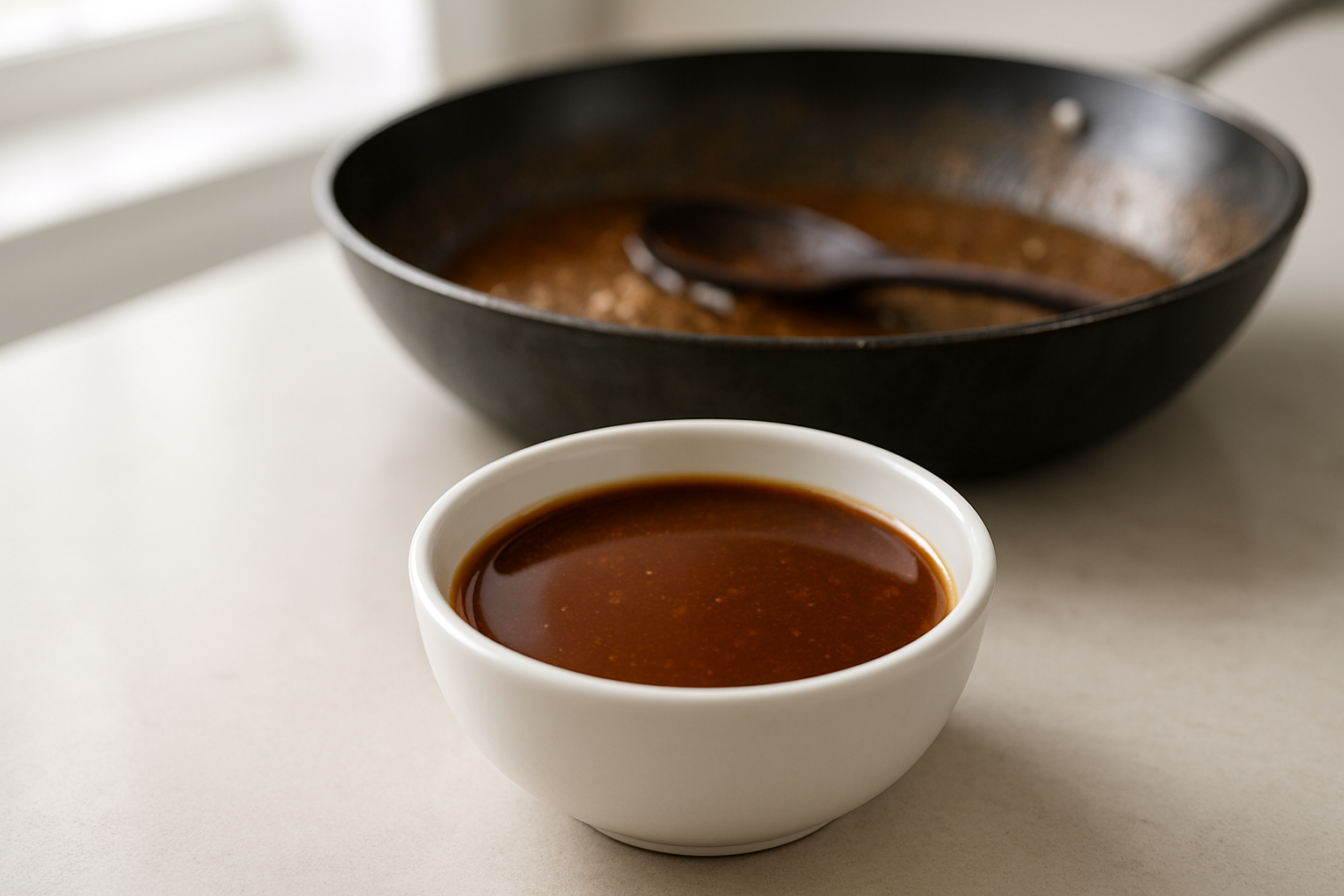
Turn the heat to medium-high. Add 1/2 cup (120 ml) of a deglazing liquid to the hot pan. Use a wooden spoon to scrape up every bit of fond from the bottom as the liquid steams and bubbles.
- Classic deglazing liquids:
- Dry white wine (for chicken, pork, seafood)
- Red wine (for beef, lamb, duck)
- Low-sodium chicken, beef, or vegetable stock
- Cider or sherry for sweeter notes
- Even water works in a pinch
- Reduce for flavor: Let the liquid simmer rapidly until reduced by half. This usually takes 2–3 minutes over medium-high heat. Concentrating the liquid intensifies the sauce’s flavor.
4. Build and Balance Your Sauce
Once the pan is deglazed, add 3/4 to 1 cup (180–240 ml) of stock or broth. Simmer briskly for 3–5 minutes, scraping the bottom to incorporate all the fond. Taste and season with salt and pepper. For a richer, silkier finish, swirl in 1–2 tablespoons of cold unsalted butter off the heat, whisking until emulsified.
- For cream sauces: Add 1/4 cup (60 ml) heavy cream after reducing the stock, and simmer for 1–2 minutes.
- For mustard or herb sauces: Whisk in 2 teaspoons Dijon mustard or a handful of chopped fresh herbs at the very end.
- To thicken: If you want a thicker sauce, simmer longer or stir in a cornstarch slurry (1 teaspoon cornstarch mixed with 2 teaspoons cold water) and cook for 30 seconds, stirring constantly.
5. Strain and Serve
For a restaurant-smooth finish, strain the sauce through a fine mesh sieve. Spoon the sauce generously over your rested protein and serve immediately.
Key Variables: Liquids, Fats, and Flavor Additions
Choosing the Right Deglazing Liquid
The choice of liquid fundamentally shapes the character of your sauce. Wine lends acidity and depth, stock brings savoriness, and spirits like brandy or bourbon add warmth and complexity. For a flavor twist, experiment with cider, beer, or even a splash of Salsa Roja for a smoky, spicy undertone. Always use a liquid you’d drink - bad wine or old stock will ruin your sauce.
Fat Is Flavor: Butter, Cream, and Beyond
Swirling in cold butter (a classic French technique called monter au beurre) gives your sauce gloss and body. Use 1–2 tablespoons per cup of sauce, off the heat, whisking rapidly. For a richer profile, try a splash of heavy cream or a spoonful of crème fraîche. If you want to infuse garlic flavor, take inspiration from this Restaurant-Style Garlic Butter Sauce recipe - sauté minced garlic gently in the fat before deglazing.
Layering Acid, Sweetness, and Heat
Balance is key. Add a squeeze of lemon juice or a few drops of vinegar for brightness. To round out the sauce, try 1/2 teaspoon honey or maple syrup. For heat, a pinch of chili flakes or a swirl of Sweet Chili Mayo can add dimension. Learn more about balancing flavors in sauces with Acid, Fat, Sugar, Salt: How to Balance Flavors in Any Homemade Sauce.
Temperature and Timing: The Details That Matter
Temperature control is essential for both fond development and sauce consistency. Searing at 400–450°F (200–230°C) ensures good browning. Deglaze while the pan is still hot - if it cools too much, the fond won’t release. For reducing, keep the heat at a lively simmer (bubbles breaking the surface steadily, around 210–215°F / 99–102°C). Watch carefully: reducing too far can make sauces overly salty or bitter.
- Tip: If your sauce is too salty after reducing, whisk in 1–2 tablespoons unsalted butter, or add a splash of unsalted stock or water to adjust.
Pan Sauce Flavor Variations: Go Beyond the Basics
Classic Steak Pan Sauce
- Sear 2 ribeye steaks (about 1 inch thick) as above, rest on a plate.
- Drain all but 1 tablespoon fat, sauté 2 minced shallots for 30 seconds.
- Deglaze with 1/2 cup dry red wine, scraping fond. Reduce by half (2–3 minutes).
- Add 3/4 cup beef stock, simmer 3–4 minutes.
- Off heat, whisk in 2 tablespoons cold butter and 1 teaspoon Dijon mustard.
- Strain and serve over steaks.
For more steak sauce inspiration, see Best Sauces for Steak: 13 Recipes Worth the Good Cut.
Chicken Pan Sauce with Herbs
- Sear 4 chicken thighs, render fat, and rest.
- Sauté 2 minced garlic cloves in 1 tablespoon fat for 30 seconds.
- Deglaze with 1/2 cup dry white wine, reduce by half.
- Add 3/4 cup chicken stock, simmer 4 minutes, scraping fond.
- Kill heat, whisk in 1 tablespoon butter, 1 tablespoon chopped tarragon, and a squeeze of lemon juice.
Pair with a drizzle of Green Goddess Dressing for a vibrant, herbal counterpoint.
Vegetarian Pan Sauce
- After sautéing mushrooms or roasted vegetables, deglaze with 1/2 cup dry sherry or white wine.
- Add 1 cup vegetable stock, reduce by half over 5–6 minutes.
- Finish with 1 tablespoon cold butter and 1 teaspoon soy sauce for extra umami.
Try spooning over roasted cauliflower, or serve alongside Thermomix Ranch Dressing for creamy contrast.
Essential Tips for Restaurant-Quality Results
- Use the right pan: Avoid nonstick pans - they don’t develop fond well. Stainless steel or cast iron is best.
- Don’t add too much liquid: Start with no more than 1/2 cup for deglazing; excess liquid dilutes flavor and takes longer to reduce.
- Keep your broth/stock low-sodium: Reducing concentrates salt as well as flavor. Season at the end for best control.
- Always rest meat before slicing: This lets juices redistribute, ensuring a juicy bite and preventing a watery sauce.
- Experiment with flavor boosters: Stir in a tablespoon of your favorite Honey BBQ Glaze, Authentic Japanese Teriyaki Sauce, or Argentine Chimichurri for global flair.
What to Serve With Pan Sauces
Pan sauces elevate not only steak and chicken, but also pork chops, roasted vegetables, and even fish. If you love experimenting with sauces, check out Best Sauces for Chicken: 15 Recipes That Elevate Every Cut or explore Best Sauces for Pasta: 12 Homemade Recipes for Every Noodle for more ideas.
Pair rich, buttery pan sauces with sides that soak up flavor: mashed potatoes, rice, or crusty bread. For a fresh balance, try a simple salad tossed with the Best Balsamic Vinaigrette or create a customized bowl using tips from 5-Minute Salad Dressings: Quick Sauces to Upgrade Any Bowl.
Troubleshooting Pan Sauces: Common Problems and Fixes
- Broken sauce (looks oily or separated): Remove from heat and whisk in 1–2 tablespoons cold water or stock, a little at a time. Learn more in How to Fix a Broken Sauce (Complete Guide).
- Too thin: Simmer to reduce further or stir in a cornstarch slurry, as above. See How to Thicken Sauces Naturally (7 Methods) for more options.
- Too salty: Whisk in cold unsalted butter, or add a splash of cream or unsalted stock.
- Not enough flavor: Add another splash of acid (lemon juice, vinegar), a pinch of salt, or a pat of butter for richness.
Expand Your Sauce Repertoire
Once you’re comfortable with pan sauces, try branching out with other sauce styles. Explore recipes like Thermomix BBQ Sauce for smoky notes, Easy Thai Peanut Sauce for nutty sweetness, or Authentic Toum (Lebanese Garlic Sauce) for punchy brightness. If you want to understand how sauces are built from the ground up, don’t miss The 5 Mother Sauces Every Home Cook Should Know (And Actually Use).
Conclusion: Unlocking Flavor at Home
Deglazing and pan sauce making are the culinary techniques that separate home cooking from restaurant quality. By understanding how to build flavor from fond, balance with acids and fats, and finish with finesse, you’ll turn weeknight meals into memorable feasts. Explore more sauce ideas with our 7 Quick Weeknight Sauces That Transform Simple Meals in Minutes, and make every meal extraordinary.