Tahini Sauce vs. Hummus: Flavor, Texture, and How to Use Each Best
Tahini sauce and hummus are staple Mediterranean condiments. Compare flavor, texture, nutrition, and best uses for each in your cooking.
Written by FoodieManiac
With over 8 years of sauce-making experience, I've tested hundreds of techniques and products to bring you practical, reliable advice. Learn more about me →
Tahini Sauce vs. Hummus: Understanding the Core Differences
Both tahini sauce and hummus are iconic staples of Middle Eastern cuisine, frequently appearing together on mezze platters but serving distinct roles in flavor, texture, and culinary use. Understanding their differences is essential for anyone serious about maximizing the impact of sauces in their kitchen.
What is Tahini Sauce?
Tahini sauce is a silky, pourable emulsion made from ground sesame seed paste (tahini), lemon juice, garlic, salt, and water. Classic ratios are:
- 1/2 cup tahini paste
- 1/4 cup freshly squeezed lemon juice
- 1 small garlic clove, grated or minced
- 1/4-1/3 cup ice water (added gradually for desired consistency)
- 1/2 tsp salt
Whisk or blend ingredients, starting with tahini, lemon juice, garlic, and salt. Add ice water in a slow stream while whisking vigorously, until the sauce turns pale and creamy, then loosens to a pourable texture. The emulsion process is similar to making a mayonnaise or Caesar dressing (Thermomix Roasted Garlic Caesar Dressing), where gradual water addition is key to preventing separation or graininess. The final sauce should be smooth and flow easily from a spoon.
What is Hummus?
Hummus is a creamy dip made from cooked chickpeas blended with tahini, lemon juice, garlic, salt, and olive oil. Standard measurements:
- 1 (15-oz) can chickpeas, drained and rinsed, or 1.5 cups cooked chickpeas
- 1/3 cup tahini paste
- 1/4 cup lemon juice
- 1-2 garlic cloves
- 1/2 tsp salt
- 2-4 tbsp cold water
- 2 tbsp olive oil (plus more for drizzling)
Combine in a food processor and blend for 2-4 minutes, scraping down as needed, until ultra-smooth. For the silkiest hummus, use warm (not hot) cooked chickpeas, ideally peeled. A food processor running for at least 2 minutes creates a lighter, airier texture. Add cold water at the end, tablespoon by tablespoon, to loosen the mixture to your desired consistency. For more on troubleshooting texture and temperature in homemade sauces, see Why Your Sauce Gets Too Thick as It Cools - Causes and How to Fix It.
Flavor Profiles: Bright vs. Earthy
Tahini Sauce: Tangy, Nutty, and Mildly Bitter
Tahini sauce is defined by its earthy sesame base, brightened with lemon and sharp garlic. The sauce is intentionally tangy—lemon juice is not just for acidity but also to lighten the sometimes-bitter tahini. A high-quality tahini made from roasted sesame seeds will yield a richer, less bitter sauce. Salt is essential, but always taste and adjust after emulsifying, since the perception of salt changes as the sauce hydrates and thickens. If your tahini sauce tastes too bitter, a teaspoon of maple syrup or honey can counteract this, but add judiciously to avoid masking the natural sesame flavor.
Hummus: Creamy, Savory, and Subtly Nutty
Hummus is more mellow due to the starchiness and mild flavor of chickpeas. Tahini provides nuttiness but plays a supporting role. Lemon and garlic are present but not as pronounced as in tahini sauce. Olive oil adds a fruity, slightly peppery finish. The overall effect is a balanced, creamy dip that can be customized with toppings like sumac, paprika, or roasted vegetables for layered flavors. For a spicy take on creamy dips, try Creamy Roasted Red Pepper Feta Dip (Htipiti) or Creamy Jalapeño Cilantro Dip (Chuy’s Copycat) for comparison.
Texture: Pourable vs. Scoopable
Tahini Sauce: Light, Fluid, and Emulsified
The ideal tahini sauce is pourable and coats food evenly. It should be thinner than mayonnaise, yet thick enough to cling to salads or roasted vegetables. Achieve this by whisking with ice water—cold water ensures the sauce turns pale and creamy, thanks to rapid emulsification. If your sauce seizes and turns thick or paste-like, keep whisking and add water in tiny increments. For drizzling, aim for a final viscosity similar to heavy cream. If you want a thicker, dip-like sauce, reduce the water or chill the sauce for 15-20 minutes.
Hummus: Dense, Creamy, and Spreadable
Hummus is designed for scooping and spreading. Its consistency ranges from dense and thick (for scooping with vegetables or pita) to lighter and almost mousse-like (for spreading in wraps). To achieve restaurant-quality smoothness, peel cooked chickpeas and blend for longer. If the hummus is too thick, blend in cold water or aquafaba (the liquid from canned chickpeas) by the tablespoon until desired consistency is reached. If it’s too thin, refrigerate for 30 minutes, as chilling thickens the starches. For more tips on sauce texture and thickness, refer to Why Your Sauce Gets Too Thick as It Cools - Causes and How to Fix It.
How to Use Tahini Sauce and Hummus Best
Best Ways to Use Tahini Sauce
- Drizzle on Roasted Vegetables: Pour over hot-from-the-oven cauliflower, carrots, or sweet potatoes for a nutty, tangy finish. Sauce will thin further on contact with heat.
- Dressing for Salads and Grain Bowls: Use as a creamy vegan dressing. For a thinner consistency, add up to 2 more tablespoons water per 1/2 cup tahini sauce, whisking well. For pairing with grains, see How to Pair Sauces With Grains: Perfect Matches for Rice, Quinoa, and More.
- Sandwich and Wrap Spread: Use in place of mayonnaise for a nutty layer of flavor. Spread on both sides of a wrap to act as a moisture barrier.
- Finisher for Grilled Meats or Fish: Spoon over grilled chicken, lamb, or salmon after resting, allowing residual heat to release the sauce’s fragrance. For more ideas, see Best Sauces for Pork: 12 Pairings for Chops, Tenderloin, and More.
- Base for Fusion Sauces: Blend with sriracha, miso, or fresh herbs for a new take, much like you'd experiment with Authentic Peruvian Aji Verde Sauce.
Best Ways to Use Hummus
- Dip for Vegetables, Pita, or Crackers: Serve chilled or at room temperature (18-21°C/65-70°F) for best flavor and texture. Allow to sit out for 20-30 minutes if refrigerated.
- Spread in Sandwiches and Wraps: Apply a thick layer for moisture and flavor. Use hummus as a base for Mediterranean or vegetarian wraps.
- Layered Dip Base: Top hummus with roasted vegetables, spiced meats, or sauces like Authentic Moroccan Chermoula Sauce for a complex appetizer.
- Component in Power Bowls: Add a scoop to grain or salad bowls—its creamy texture brings everything together and adds plant-based protein.
- Thickener for Dressings or Sauces: Whisk a spoonful into vinaigrettes or creamy sauces to add body, similar to using Thermomix Creamy Chipotle Sauce or Creamy Sriracha Mayo Sauce.
Temperature and Serving Tips
Tahini sauce is best served at cool room temperature (15-20°C/59-68°F). If refrigerated, let it stand for 10-15 minutes and whisk before serving—cold tahini sauce can thicken and separate. If it’s too thick, add a splash of warm water and whisk vigorously.
Hummus should be brought to room temperature for optimal creaminess and flavor. If made ahead, store in an airtight container for up to 5 days. Drizzle with olive oil just before serving to prevent drying. For freezing tips, see How to Freeze Sauces for Maximum Freshness: Methods, Tips, and Mistakes to Avoid.
Expert Tips for Perfect Tahini Sauce and Hummus Every Time
For Tahini Sauce
- Always Use Cold Water: Cold water is critical for a pale, creamy emulsion. Room temperature or warm water can cause splitting or grittiness.
- Blend or Whisk Vigorously: The more you whisk, the lighter and silkier your sauce will be. A food processor or immersion blender works well for bulk batches.
- Balance Bitterness: If your tahini paste is bitter, use slightly less and increase lemon juice or add a touch of sweetener.
- Thin to Desired Consistency: For drizzling, aim for 1:1 tahini to water ratio. For a thicker dip, reduce water by half.
For Hummus
- Peel Chickpeas for Silky Texture: For ultra-smooth hummus, peel the skins from each chickpea before blending. It’s tedious, but the payoff is dramatic.
- Blend While Warm: Warm chickpeas blend more smoothly than cold ones. If using canned, microwave for 45-60 seconds at 70% power before blending.
- Don’t Rush the Blending: Process for at least 2-4 minutes in a food processor, scraping the sides as needed. Texture improves with time.
- Add Ice Water Last: Incorporate cold water at the end for a lighter, fluffier hummus.
Common Mistakes and How to Fix Them
Tahini Sauce Problems
- Seized or Grainy Sauce: Add more cold water, a teaspoon at a time, and whisk vigorously. Avoid adding oil, which can cause separation.
- Too Thin: Whisk in more tahini paste or refrigerate for 10-15 minutes to thicken.
- Too Bitter: Use higher quality tahini, increase lemon juice, or add a small amount of honey/maple syrup.
Hummus Problems
- Too Thick: Add cold water or aquafaba by tablespoon, blending after each addition.
- Too Thin: Blend in more chickpeas or tahini, or chill before serving.
- Grainy Texture: Peel chickpeas and blend longer. If using a standard blender, process in smaller batches for a finer result.
For more troubleshooting on sauce consistency, check out Why Your Sauce Gets Too Thick as It Cools - Causes and How to Fix It and Why Your Quick Pan Sauce Turns Out Thin - Easy Ways to Thicken Fast.
Pairings and Modern Fusion Ideas
Tahini sauce pairs especially well with grilled and roasted vegetables, falafel, lamb, and as a topping for grain bowls. Hummus is more versatile as a dip, sandwich spread, or even as a base for creative appetizers. For global inspiration, experiment with sauces like Authentic Moroccan Chermoula Sauce, or try a bold BBQ spin such as Homemade Spicy Pineapple BBQ Sauce for a sweet-and-savory contrast to hummus’s creaminess.
Both sauces also freeze well; freeze in airtight containers with a thin layer of olive oil on top to prevent drying or freezer burn. For more on freezing and thawing, see Freezing Sauces 101: Best Sauces to Freeze and How to Thaw Them Safely.
Conclusion: When to Use Tahini Sauce vs. Hummus
Use tahini sauce when you want a pourable, tangy, nutty dressing or drizzle—perfect for vegetables, salads, wraps, or as a finisher for proteins. Use hummus when you need a creamy, protein-packed dip, a hearty spread, or a base for layered appetizers. Both are best made fresh, with attention to temperature, water addition, and emulsion technique for optimal flavor and texture.
For a deeper dive into their history, differences, and best pairings, visit Tahini Sauce vs. Hummus: Differences, Uses, and Best Pairings. To expand your sauce repertoire, explore fusion dips like Thermomix Creamy Roasted Beetroot & Horseradish Dip or classic Mediterranean flavors in Authentic Lebanese Toum (Garlic Sauce) Recipe.
TAGS
Try These Recipes
Related Articles
Freezing Sauces 101: Best Methods to Preserve Flavor, Texture, and Quality
Learn how to freeze sauces the right way. Discover tips on storage, thawing, and which sauces freeze best to keep flavors fresh and textures perfect.
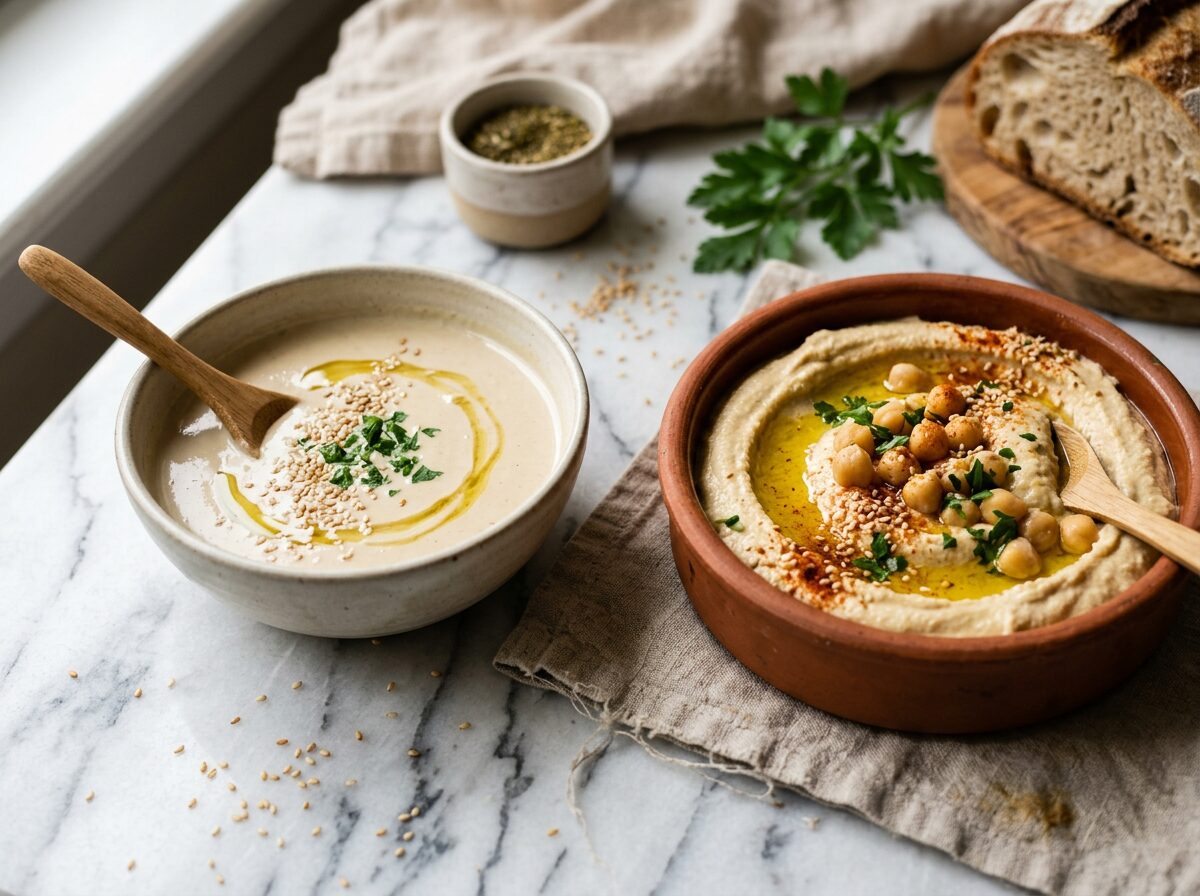
Tahini Sauce vs. Hummus: Differences, Uses, and When to Choose Each
Compare tahini sauce and hummus: key ingredients, texture, flavor, and best uses. Learn when to use each Middle Eastern classic in your cooking.
Worcestershire Sauce vs. Soy Sauce: Flavor, Uses, and Substitutes Compared
Compare Worcestershire sauce and soy sauce—flavor, cooking uses, substitutes, and when to use each for the best results in your recipes.
Tahini Sauce vs. Hummus: Differences, Uses, and Best Pairings
Compare tahini sauce and hummus: ingredients, textures, uses, and ideal pairings. Learn when to use each Middle Eastern sauce for best flavor results.