Freezing Sauces 101: Best Methods to Preserve Flavor, Texture, and Quality
Learn how to freeze sauces the right way. Discover tips on storage, thawing, and which sauces freeze best to keep flavors fresh and textures perfect.
Written by FoodieManiac
With over 8 years of sauce-making experience, I've tested hundreds of techniques and products to bring you practical, reliable advice. Learn more about me →
Understanding Sauce Freezing: Why, When, and How
Freezing sauces is a powerful way to preserve homemade flavor, reduce food waste, and save prep time for future meals. Whether you’re batch-cooking a vibrant chutney or prepping a week’s worth of copycat Big Mac Sauce, the right freezing techniques ensure your sauces emerge from the freezer with maximum flavor, ideal texture, and safe quality. This guide covers the science and best practices of freezing every type of sauce, from creamy dressings to tangy BBQ blends.
The Science of Freezing: How It Affects Sauce Flavor and Texture
Freezing slows enzyme activity and halts microbial growth, effectively “pausing” your sauce’s freshness. However, temperatures, ice crystal formation, and ingredient composition all play roles in the texture and flavor you’ll get after thawing. Water-rich sauces freeze best, while those high in dairy or emulsified fats (like mayonnaise or aioli) can separate or turn grainy unless handled carefully.
- Optimal freezer temperature: −18°C / 0°F or colder for best preservation.
- Ice crystal size: Fast freezing creates smaller crystals, minimizing damage to emulsions and texture.
- Avoiding freezer burn: Proper wrapping and airtight containers are essential to prevent dehydration and off-flavors.
Which Sauces Freeze Well—and Which Don’t?
Not all sauces freeze with equal success. Knowing which recipes to freeze is crucial:
- Best for freezing: Tomato-based sauces (like roasted tomato basil), cooked BBQ sauces, brothy gravies, pesto (with some modifications), and most chutneys.
- Tricky to freeze: Emulsified sauces (mayonnaise, aioli), dairy-heavy sauces (cream, cheese), and fresh herb sauces with high water content (such as chimichurri).
For more on which sauces freeze best and safe thawing, see Freezing Sauces 101: Best Sauces to Freeze and How to Thaw Them Safely.
How to Prepare Sauces for Freezing
Cool Completely and Portion Wisely
Let sauces cool to room temperature (below 40°F/4°C) before freezing to prevent condensation and ice crystals. Portion into meal-sized servings using airtight containers or freezer bags. For fast thawing, freeze in 1-cup or 2-tablespoon “ice cube” portions using silicone trays or muffin tins.
Choose the Right Container
- Plastic freezer containers: Thick, BPA-free containers prevent freezer burn and odor transfer.
- Glass jars: Use only wide-mouth, straight-sided jars and leave at least 1 inch headspace to allow for expansion—never fill to the rim.
- Freezer bags: Squeeze out excess air, lay flat to freeze (for faster thawing), and double-bag if using thin bags.
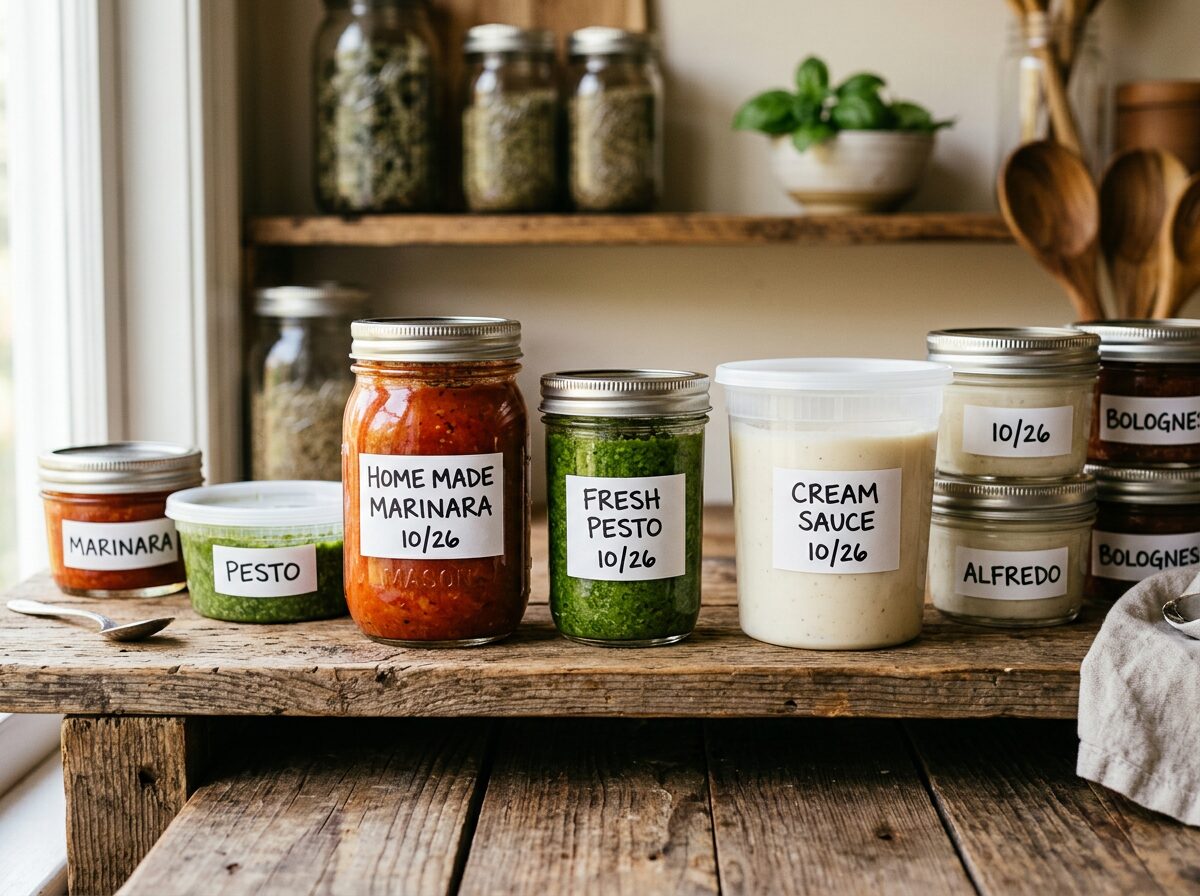
Label Everything
Label each container with sauce type, portion size, and freezing date. Most sauces maintain best quality for 2–4 months in the freezer, though they’re usually safe beyond that if kept below 0°F.
Freezing Methods for Different Sauce Types
Tomato-Based Sauces
Tomato sauces (marinara, puttanesca, arrabbiata) freeze beautifully because their acidity and water content protect flavor and texture. Cool completely, portion, and freeze. For best results, avoid adding dairy/cream until reheating. Try with Thermomix Roasted Tomato Basil Sauce.
Creamy and Cheese Sauces
High-fat sauces (alfredo, béchamel, cheese dips) are prone to separation and graininess due to fat and water splitting when frozen. For best results:
- Thicken with a flour or cornstarch slurry (1 tablespoon per cup) before freezing to stabilize the emulsion.
- Reheat gently over low heat, whisking constantly. Add a splash of milk or cream if the sauce splits.
- For troubleshooting, see Why Your Creamy Sauce Turns Watery After Refrigeration: Prevention Tips.
Great with Creamy Roasted Garlic Parmesan Dip or Thermomix Creamy Sun-Dried Tomato Basil Sauce.
Herb-Heavy and Pesto-Style Sauces
Herb sauces like chimichurri, aji verde, or green chutney can brown or lose vibrancy after freezing.
- Add a thin layer of olive oil to the surface before sealing to minimize oxidation.
- Freeze without cheese or nuts, adding these after thawing for best texture.
- Freeze in small portions to use quickly after thawing.
Looking for a fresh, zesty sauce? Try Avocado Cilantro Lime Crema or Authentic Indian Mint Cilantro Chutney.
BBQ, Sweet, and Spicy Sauces
BBQ sauces, hot sauces, and sweet glazes are highly freezer-friendly. Their sugar, vinegar, and spice content act as natural preservatives.
- For thick sauces, freeze in smaller, shallow containers for even, quick freezing.
- If using as a glaze, thaw fully and whisk before brushing onto foods.
Try freezing a batch of Spicy Maple Sriracha BBQ Sauce or Homemade Sweet Chipotle BBQ Sauce.
Emulsified and Mayonnaise-Based Sauces
Sauces based on mayonnaise or egg yolk (like Copycat Taco Bell Baja Sauce or remoulade) do not freeze well; they often separate, become watery, or develop a gritty texture. If you must freeze, be prepared to re-emulsify with a blender and add a teaspoon of water or vinegar to restore consistency.
Actionable Tips for Freezing Sauces (and Avoiding Pitfalls)
- Blanch before freezing: For fresh herb-based sauces, blanch herbs in boiling water for 10–15 seconds, then shock in ice water. This preserves green color and flavor.
- Cool quickly: Divide hot sauce into shallow pans to speed cooling. Never put hot sauce directly into the freezer; it raises freezer temperature and risks bacterial growth.
- Prevent freezer burn: Use a double layer of wrap or bags for long-term storage. Remove as much air as possible using a vacuum sealer or by pressing air out of freezer bags.
- Don’t refreeze thawed sauce: Once defrosted, use within 3 days and never refreeze, as texture and flavor degrade and food safety risks increase.
- Freeze “base” sauces: Prepare tomato, vegetable, or curry bases, then add cream, dairy, or fresh herbs after thawing for best results.
How to Thaw and Reheat Frozen Sauces Safely
- In the fridge: Place frozen sauce in the refrigerator for 8–24 hours for slow, safe thawing. This is safest for dairy- and egg-based sauces.
- Quick thaw: Submerge sealed bag or container in cold water, changing water every 30 minutes. Small portions thaw in 30–60 minutes.
- Direct to pan: For tomato or BBQ sauces, reheat directly from frozen over gentle heat, stirring frequently.
Never thaw sauces at room temperature longer than 2 hours (or 1 hour above 90°F/32°C) due to bacterial growth risk.
For more in-depth freezing and storage techniques, see How to Freeze Sauces the Right Way: Storage Tips for Maximum Freshness.
Fixing Texture Issues After Thawing
- Separated creamy sauces: Whisk vigorously or blend with an immersion blender. Add a splash of hot milk or broth to help re-emulsify.
- Grainy cheese sauces: Heat gently, stirring constantly. Add a spoonful of cream cheese or processed cheese to smooth texture.
- Oily herb sauces: Re-blend or whisk in a few drops of vinegar or lemon juice to bring the emulsion back together.
For more on fixing common sauce problems, explore Why Your Quick Creamy Sauces Separate and How to Fix It Fast.
Best Practices: Storage Times and Organization
- 2–4 months: Most homemade sauces retain best flavor and texture within this window at −18°C/0°F or colder.
- 6 months: Acidic, high-sugar sauces (BBQ, ketchup, salsas) may last up to 6 months with minimal quality loss.
- First in, first out: Store newer sauces at the back and use older ones first. Keep a freezer inventory to track contents and prevent forgotten, expired batches.
Frequently Asked Questions
Can I freeze sauces in glass jars?
Yes—with caution. Only use straight-sided, wide-mouth jars and leave at least 1 inch headspace. Sudden temperature changes can crack glass, so let cool before freezing and thaw slowly in the fridge.
Why do some sauces turn watery or grainy after freezing?
Water separates from fats and proteins during freezing and thawing, especially in dairy-based or emulsified sauces. For causes and fixes, see Why Your Quick Creamy Sauce Turns Watery: Causes and Simple Fixes.
Can I freeze sauces with fresh avocado?
Avocado sauces (like Avocado Cilantro Lime Crema) can be frozen, but may darken and lose some creaminess. Add extra lime juice to minimize browning and pulse in a blender after thawing to restore texture.
Top Sauce Recipes to Batch and Freeze
- Thermomix Roasted Tomato Basil Sauce: Perfect for pasta, pizza, or dipping.
- Homemade Sweet Chipotle BBQ Sauce: Ideal for grilling season or weeknight dinners.
- Creamy Roasted Garlic Parmesan Dip: Make ahead for parties, then thaw and serve.
- Authentic Indian Mint Cilantro Chutney: Freeze in small cubes for instant flavor boosts.
Expert Tips for Freezing Sauces Like a Pro
- Blanch and blend: For green herb sauces, blanch herbs and blend with oil before freezing for vibrant color.
- Leave out sensitive ingredients: Add dairy, fresh herbs, or citruses after thawing if possible.
- Consider your end use: Freeze sauces in the portion sizes you’ll use—no more, no less.
- Keep your freezer organized: Use bins or baskets and clear labeling for easy access.
Related Guides for Sauce Lovers
- How to Pair Sauces With Pasta Shapes: Matching Texture and Flavor
- Deglazing Demystified: How to Build Deep Flavor in Pan Sauces
- How to Freeze Sauces the Right Way: Storage Tips for Maximum Freshness
- Freezing Sauces 101: Best Sauces to Freeze and How to Thaw Them Safely
Conclusion: Make Freezing Sauces Work for You
Mastering the art of freezing sauces lets you cook smarter and eat better. By choosing freezer-friendly recipes, following science-backed techniques, and paying attention to storage and reheating, you’ll enjoy homemade sauces with peak flavor and quality—any night of the week. For more tips and troubleshooting, explore our extensive sauce recipe collection and expert guides on FoodieManiac.com.
TAGS
Related Articles
Freezing Sauces 101: Best Sauces to Freeze and How to Thaw Them Safely
Discover which sauces freeze well, step-by-step freezing methods, and how to safely thaw for best flavor and texture. Preserve your homemade sauces longer.
How to Freeze Sauces for Maximum Freshness: Methods, Tips, and Mistakes to Avoid
Learn the best techniques to freeze sauces, dressings, and dips. Discover which sauces freeze well, storage tips, and how to thaw for best results.
Freezing Sauces 101: Best Methods for Preserving Flavor and Texture
Learn how to freeze sauces the right way—tips for creamy, tomato, and herb sauces plus thawing tricks to maintain taste and texture.
How to Deglaze Like a Pro: Unlocking Deep Flavor for Restaurant-Quality Sauces
Master deglazing to build rich, complex sauces at home. Step-by-step techniques, liquid choices, and chef tips for pro-level flavor every time.