Tahini Sauce vs. Hummus: Differences, Uses, and Best Pairings
Compare tahini sauce and hummus: ingredients, textures, uses, and ideal pairings. Learn when to use each Middle Eastern sauce for best flavor results.
Written by FoodieManiac
With over 8 years of sauce-making experience, I've tested hundreds of techniques and products to bring you practical, reliable advice. Learn more about me →
Tahini Sauce vs. Hummus: Differences, Uses, and Best Pairings
Understanding the Core Ingredients
Tahini sauce and hummus are two pillars of Middle Eastern cuisine, but their compositions are distinct. Traditional tahini sauce is a simple emulsion of tahini paste (ground sesame seeds), lemon juice, water, garlic, and salt. It contains no legumes. In contrast, hummus is a blended dip made primarily from cooked chickpeas, tahini, lemon juice, garlic, olive oil, and salt.
- Tahini Sauce: 100% sesame paste base, thinned with water, acidified with lemon
- Hummus: 60-70% chickpeas, 20-30% tahini, with seasoning and olive oil
For best results, use hulled, lightly toasted sesame seeds for tahini paste. For hummus, soak dried chickpeas overnight and simmer at a gentle boil (90-95°C) for 60-90 minutes, or pressure cook for 15-20 minutes for creamier texture.
Texture, Appearance, and Mouthfeel
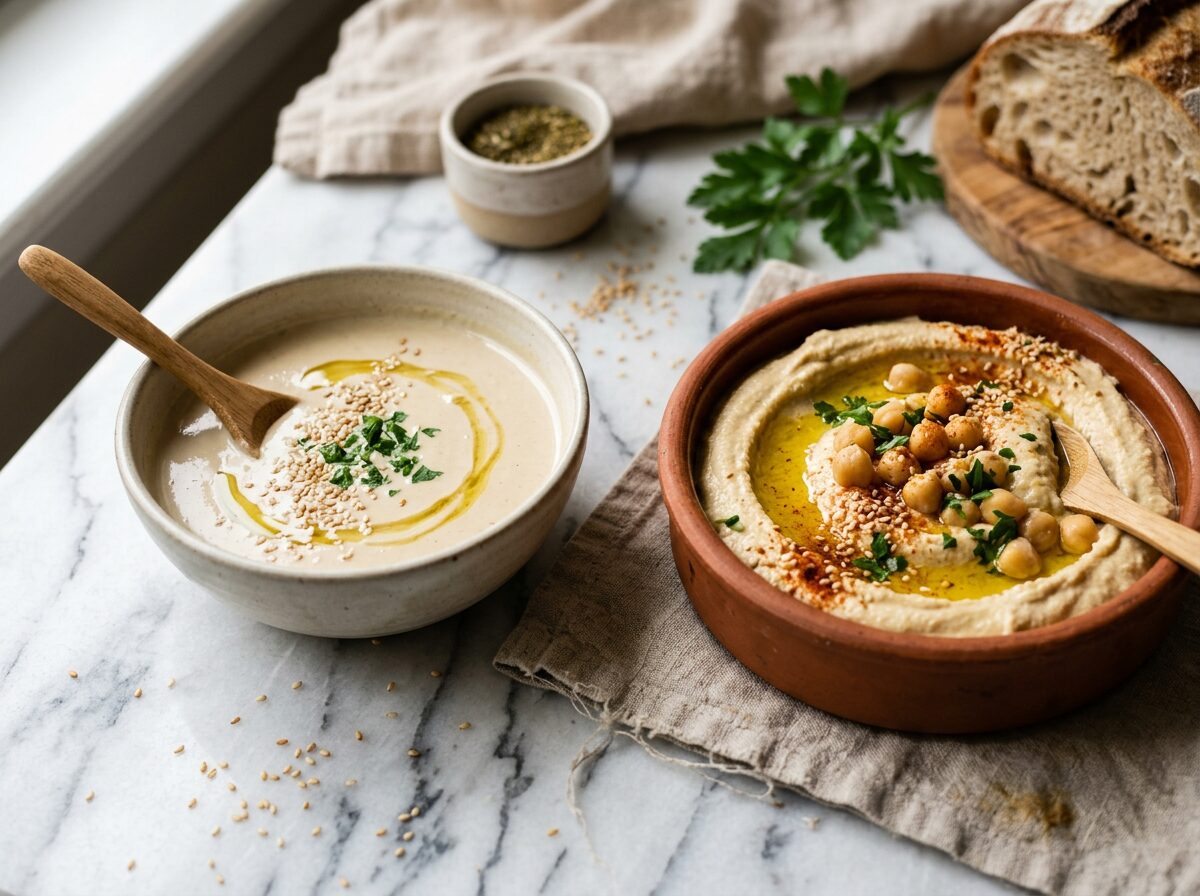
Tahini sauce is pourable, creamy, and smooth. It should be the consistency of heavy cream, easily drizzling off a spoon. Achieve this by whisking 1/2 cup tahini paste with 1/4 cup lemon juice, 1/4 cup ice-cold water, 1 clove minced garlic, and 1/2 teaspoon salt. Add water in small increments to reach your desired viscosity—too much will thin it, too little will make it pasty.
Hummus is thick and spoonable, holding its shape. Blend 1 1/2 cups cooked chickpeas (drained and peeled for silkiness), 1/4 cup tahini, 3 tablespoons lemon juice, 2 tablespoons cold water, 1 small garlic clove, and 1/2 teaspoon salt. For ultra-smooth hummus, blend for 3-5 minutes in a food processor, scraping the sides and adding ice water to loosen as needed.
Flavor Profiles and Customization
Tahini sauce is nutty, earthy, slightly bitter, and bright from lemon juice. Its flavor is direct, clean, and accentuates whatever it coats. Optionally, add 1/2 teaspoon ground cumin or a pinch of cayenne for extra dimension.
Hummus has a mellow, creamy base with subtle nutty notes from tahini, balanced by citrus and garlic. The chickpeas give it an earthy, starchy undertone. Hummus can be varied with toppings—paprika, sumac, olive oil, or herbs like parsley. For roasted flavor, blend in 1/2 cup fire-roasted red peppers or caramelized onions.
How to Make Perfect Tahini Sauce and Hummus
Tahini Sauce: Step-by-Step
- Ingredients: 1/2 cup tahini, 1/4 cup lemon juice, 1/4 cup ice-cold water, 1 small garlic clove (minced), 1/2 tsp salt
- Method: In a medium bowl, whisk tahini and lemon juice until the mixture seizes and lightens in color. Gradually add ice water, whisking vigorously until the sauce turns creamy and smooth. Add garlic and salt, whisk again. Taste and adjust salt or lemon as needed.
- Consistency Tip: If too thick, add water a tablespoon at a time. If too thin, whisk in more tahini.
- Serving: Use immediately or cover and refrigerate for up to 5 days. Whisk vigorously to re-emulsify if separated (see Why Do My Homemade Sauces Separate in the Fridge? for troubleshooting).
Hummus: Step-by-Step
- Ingredients: 1 1/2 cups cooked chickpeas, 1/4 cup tahini, 3 tbsp lemon juice, 2 tbsp ice water (plus more as needed), 1 small garlic clove, 1/2 tsp salt, 2 tbsp extra virgin olive oil
- Method: For smoothest hummus, peel chickpeas after cooking by gently squeezing them between your fingers. In a food processor, blend chickpeas, tahini, lemon, garlic, salt. With processor running, drizzle in olive oil and ice water. Blend for 3-5 minutes, scraping down sides. Add water for thinner texture.
- Temperature Tip: Warm chickpeas (not hot) blend creamier; let cooked chickpeas cool to 40-50°C before blending.
- Serving: Spoon into a shallow bowl, drizzle with olive oil, and sprinkle with paprika or za’atar. Hummus keeps refrigerated up to 5 days. See Freezing Sauces 101 for batch storage advice.
Primary Uses: Where Each Sauce Shines
Tahini Sauce: The Versatile Drizzle
Tahini sauce is used as a finishing sauce, dip, or dressing. Its fluid texture makes it ideal for drizzling over:
- Roasted and grilled vegetables—Broccoli, cauliflower, carrots, or sweet potatoes (toss in sauce while veggies are hot to help it coat evenly)
- Salads and grain bowls—Mix with cooked grains while warm (see How to Pair Sauces With Grains)
- Falafel, shawarma, or kebabs—Spoon over hot proteins right before serving to avoid splitting
- Sandwiches and wraps—Spread on pita or lavash for moisture and flavor
- Fish and seafood—Especially grilled or baked white fish, shrimp, or salmon
Chill tahini sauce for 30 minutes before serving with raw vegetables as a dip. For a garlicky variation, try Authentic Lebanese Tarator Sauce.
Hummus: The Classic Dip and Spread
Hummus is best as a dip, spread, or base layer. Its thickness keeps it in place on:
- Pita bread, crackers, crudités—Serve slightly chilled or at room temperature for optimal flavor
- Sandwiches and wraps—Spread generously on both sides of bread to prevent sogginess
- Grain bowls and salads—Dollop on top rather than mixing in, to preserve texture
- Mezze platters—Pair with olives, cheeses, pickles, and other spreads
- Roasted meats—Use as a creamy “bed” for sliced lamb, chicken, or beef
For extra flavor, swirl in Authentic Moroccan Chermoula Sauce or top with a drizzle of Peruvian Aji Verde Sauce for a fusion twist.
Best Pairings: What Goes With Tahini Sauce and Hummus?
Pairing Tahini Sauce
- Vegetables: Grilled eggplant, roasted carrots, or steamed asparagus. Serve vegetables hot (60-70°C) for best absorption.
- Proteins: Falafel, grilled chicken (brush on in last 2 minutes of cooking at 200°C to prevent burning), baked salmon.
- Grains and Legumes: Farro, quinoa, lentil salads (mix in 2-3 tablespoons sauce per cup cooked grain).
- Sandwiches: Drizzle over lamb gyros or shawarma wraps right before serving for a creamy tang.
- Dips and Cross-Cuisine: Try blending tahini sauce with Creamy Jalapeño Cilantro Dip for a spicy, herbaceous spread.
For more pairing ideas, see Best Sauces for Grilled Vegetables.
Pairing Hummus
- Breads: Fresh pita triangles, naan, or sourdough toast (warm bread to 50°C for a supple, pillowy texture).
- Snack Boards: Add to cheese and charcuterie boards with olives, nuts, and pickles.
- Roasted Meats: Lamb, chicken thighs, or steak strips—serve over a swoosh of hummus for creamy contrast.
- Vegetable Platters: Carrots, cucumbers, radishes, and bell peppers for crunch and freshness.
- Wraps and Bowls: Use as a spread in veggie wraps, or dollop onto grain bowls alongside Authentic Mexican Salsa Verde for a tangy counterpoint.
For creative variations, blend in 2 tablespoons of Thermomix Creamy Chipotle Sauce for a smoky, spicy hummus.
Actionable Cooking Tips: Elevate Your Sauces
How to Prevent Bitterness in Tahini Sauce
Some tahini brands are more bitter due to over-roasted sesame seeds. To mellow bitterness:
- Use hulled, light-colored tahini made from lightly toasted seeds.
- Increase lemon juice by 1-2 teaspoons to brighten flavors.
- Add 1/2 teaspoon honey or maple syrup for balance.
- Whisk sauce for a full minute to aerate and smooth out sharp edges.
How to Make Hummus Ultra-Smooth
For restaurant-quality, silky hummus:
- Peel chickpeas after cooking for a smoother puree.
- Blend while chickpeas are warm, not hot.
- Add ice-cold water during blending to help emulsify and lighten texture.
- Let hummus rest for 20 minutes before serving to let flavors meld.
Store hummus in an airtight container, with a thin layer of olive oil to prevent drying (see Freezing Sauces 101 for long-term storage tips).
Batch Preparation and Storage
- Tahini Sauce: Makes 1 cup; refrigerate up to 5 days. Whisk before each use as separation is natural.
- Hummus: Makes 2 cups; refrigerate up to 5 days. For longer storage, freeze in 1-cup portions. Thaw overnight in the fridge and stir before serving.
For creamier hummus after thawing, blend with 1-2 tablespoons warm water.
Differences at a Glance
| Tahini Sauce | Hummus | |
|---|---|---|
| Main Ingredient | Sesame paste (tahini) | Chickpeas + tahini |
| Texture | Pourable, creamy | Thick, spreadable |
| Primary Use | Drizzle/dressing/dip | Dip/spread/base |
| Protein Content | Sesame-based | Legume-based |
| Best Pairings | Veggies, meats, grains | Breads, veggies, meats |
Creative Variations and Flavor Pairings
Spicy, Herby, and Sweet Twists
- Spicy Tahini Sauce: Whisk in 1-2 teaspoons Aji Verde Sauce for heat and herbal complexity.
- Herby Tahini Sauce: Blend with 1/2 cup parsley or cilantro for a green, fresh note—pairs well with grilled fish.
- Sweet Tahini Sauce: Add 1 tablespoon honey and a pinch of cinnamon for a drizzle over roasted sweet potatoes or as a dip for fruit.
- Roasted Garlic Hummus: Blend in 2-3 cloves roasted garlic for depth (roast at 200°C for 30 minutes until caramelized).
- Spicy Hummus: Add 1 tablespoon Spicy Maple Sriracha BBQ Sauce for a smoky kick.
Beyond Tahini and Hummus: Exploring More Sauces
If you love the versatility of tahini and hummus, try experimenting with other global sauces and dips. For example, Thermomix Creamy Roasted Garlic Caesar Dressing offers a creamy, umami punch for salads and veggies. For heat and tang, try Authentic Argentine Chimichurri Sauce on grilled meats.
For more quick sauce ideas, check out How to Make 3-Ingredient Sauces.
Conclusion: Choosing the Right Sauce for Your Dish
Choose tahini sauce when you need a pourable, nutty, and bright drizzle to elevate vegetables, meats, or grains. Choose hummus when you want a hearty, creamy dip or spread that can anchor a mezze platter or sandwich. Both sauces are easy to customize and batch-prep, and each brings different flavors and textures to the table. For more pairing inspiration, see How to Pair Sauces With Grains or explore our Creamy Roasted Jalapeño Ranch Dip for a tangy, spicy alternative.
TAGS
Try These Recipes
Related Articles
Tahini Sauce vs. Hummus: Differences, Uses, and When to Choose Each
Compare tahini sauce and hummus: key ingredients, texture, flavor, and best uses. Learn when to use each Middle Eastern classic in your cooking.
Tahini Sauce vs. Hummus: Flavor, Texture, and How to Use Each Best
Tahini sauce and hummus are staple Mediterranean condiments. Compare flavor, texture, nutrition, and best uses for each in your cooking.
Best Sauces for Pork: 12 Easy Pairings for Chops, Tenderloin, and More
Discover 12 delicious sauces that perfectly complement pork chops, tenderloin, ribs, and more. Elevate every pork dish with these easy pairing ideas.
Tahini vs. Peanut Sauce: Flavor, Uses, and Nutrition Compared
Tahini and peanut sauce each bring unique flavors to dishes. Compare taste, texture, uses, and nutrition to choose the right sauce for your recipe.