Why Your Cheese Sauce Turns Grainy - Causes and Easy Fixes Explained
Struggling with lumpy or gritty cheese sauce? Learn the common mistakes, science, and simple tricks for a smooth, creamy cheese sauce every time.
Written by FoodieManiac
With over 8 years of sauce-making experience, I've tested hundreds of techniques and products to bring you practical, reliable advice. Learn more about me →
Why Cheese Sauce Turns Grainy: The Real Causes (and the Easy Fixes)
I’ll be the first to admit it: I’ve ruined more cheese sauces than I care to count. I’m talking rubbery, gritty, sad puddles that looked nothing like the smooth, glossy sauce in the photos. If you’re here, you’ve probably stared into a pot of lumpy, grainy cheese sauce and wondered, “What did I do?” I promise you’re not alone. It’s one of those things that seems simple… until it isn’t.
Let’s walk through exactly why cheese sauce gets grainy, how to fix it if you catch it early, and what to do next time so you never have to eat gritty mac and cheese again. This is all coming from someone who’s made every mistake in the book, so you’re getting the real kitchen truth.
What Actually Makes Cheese Sauce Grainy?
First, the science bit (but no jargon, I swear): Cheese sauce goes grainy because the proteins in the cheese seize up and clump together instead of melting smoothly. Usually, this happens when things get too hot, too fast, or when you use the wrong cheese or technique.
Here’s the quick breakdown of the main culprits:
- Too much heat: Overheating is the #1 reason. Cheese melts at a surprisingly low temperature - around 150°F (65°C). Push it hotter and the proteins tighten up, squeezing out fat and water. That’s when you get the dreaded curdled, grainy mess.
- Adding cheese too quickly: If you throw in handfuls all at once, you overwhelm the sauce and it can’t absorb it smoothly.
- Wrong cheese: Pre-shredded cheese has anti-caking agents that mess with melting. Super-aged or low-moisture cheeses don’t melt well either. (Parmesan on its own will never give you a glossy nacho sauce - I learned that the hard way.)
- Not enough starch or liquid: The flour (or cornstarch) in a roux isn’t just for thickening - it actually helps keep cheese proteins from clumping. Skip it or get the ratio wrong, and you’re in trouble.
If you want to geek out on the details, my Why Sauces Break (And How to Prevent It Every Time) guide goes deep on the science of emulsions and why this happens. But for now, let’s get into what you can actually do right now.
The Most Common Grainy Cheese Sauce Mistakes (And How to Dodge Them)
1. Cranking Up the Heat
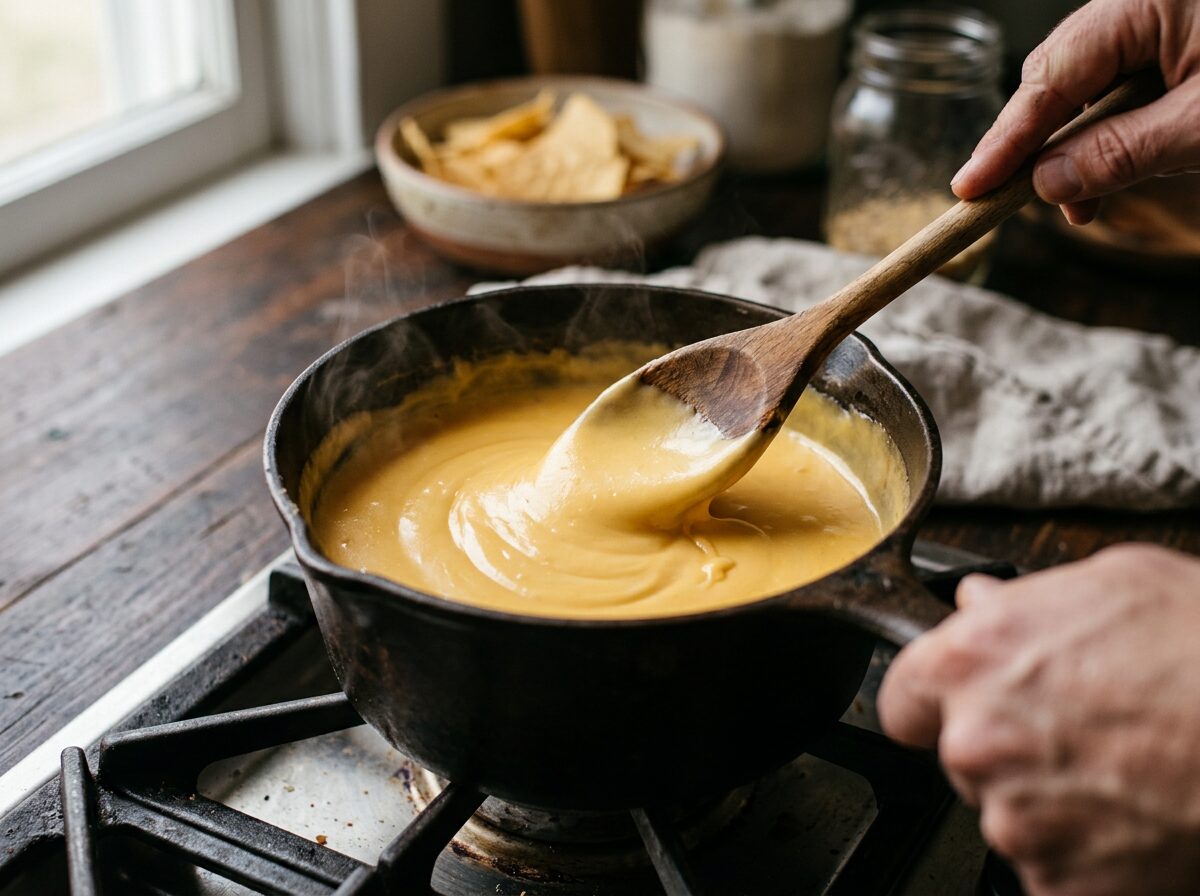
I get it. You’re hungry. You want that cheese sauce now. But if you boil your sauce or even let it simmer for too long, you’re basically asking for it to split. The best cheese sauces are made low and slow. I usually keep my burner on medium-low, and if I see bubbles, I back off immediately. Seriously - once you scorch the bottom, there’s no saving it. (Been there. Smelled that.)
2. Dumping in All the Cheese at Once
This is a classic impatience move. The cheese needs to melt gently, bit by bit. I shred it fresh (see why in a sec), then add a small handful at a time, whisking constantly and not adding more until the last batch is melted. If you’re in a rush and dump it all in, the temperature drops too fast and clumps form. Trust me - take the extra two minutes.
3. Using Pre-Shredded or Super-Aged Cheese
I used to buy bags of pre-shredded cheese for convenience. Turns out, the stuff that keeps it from sticking in the bag (cellulose, potato starch) also keeps it from melting smoothly. You don’t have to buy the fanciest block, but get a decent medium or sharp cheddar and shred it yourself. Mild cheeses melt best, but I like a mix for flavor. Save your super-aged stuff for the cheese board, not your sauce.
4. Not Starting with a Roux or Slurry
Even for “easy” cheese sauces, a little starch goes a long way. I start with a tablespoon of butter and a tablespoon of flour for every cup of milk, whisked and cooked for about 2 minutes. If you’re gluten-free, cornstarch works too (mix it with cold milk first). The starch coats the proteins and helps the sauce stay smooth when you add the cheese.
How to Rescue a Grainy Cheese Sauce (If You Catch It Early)
Okay, so what if you already have a gritty mess on your hands? If it’s just starting to split, you might save it:
- First, take it off the heat. Get it off the burner ASAP. Heat is the enemy here.
- Add a splash of cold milk or cream. This helps cool things down and adds back some moisture. Whisk like crazy. Sometimes, this is all it takes.
- Hit it with an immersion blender. If whisking isn’t working, I’ve had luck blitzing the sauce on low. It won’t be perfect, but it’ll break up the biggest clumps.
- If all else fails, strain it. I’ve literally poured a split sauce through a fine mesh strainer to catch the worst lumps. It’s not silky-smooth, but it’s still better than nothing. (And honestly, it’s still delicious on fries.)
If you want a more general playbook for saving broken or split sauces, check out How to Rescue Any Sauce (The Complete Guide).
How to Make Cheese Sauce That’s Smooth Every Time
The Best Cheese for Melting
You don’t need anything fancy. For classic cheese sauce (think homemade mac and cheese or nachos), I use:
- Medium or sharp cheddar (block, not pre-shredded)
- Gruyère or Monterey Jack for extra meltiness
- American cheese (yes, really) for foolproof silkiness - just one or two slices goes a long way
Skip low-moisture cheeses like Parmesan unless you’re mixing them in at the end for flavor, not body.
Classic Cheese Sauce Ratio
Here’s the basic ratio that never fails me:
- 2 tablespoons butter
- 2 tablespoons all-purpose flour
- 2 cups whole milk (don’t use skim - it’s too watery)
- 2 cups shredded cheese (about 200g)
- 1/2 teaspoon salt (then taste and add more if needed - you can’t un-salt a sauce)
- 1/2 teaspoon mustard powder (optional, but it brings out the cheese flavor)
Start by melting butter, whisk in the flour, cook for 2 minutes (don’t let it brown), then slowly whisk in milk until smooth. Bring to a gentle simmer, then turn down the heat. Add cheese a handful at a time, whisking constantly. When it’s all melted, season and serve.
Don’t forget: if your sauce is just a little too thick, add more milk. Too thin? Let it bubble gently for another minute, stirring constantly.
For a spicy, creamy twist, try swirling in a spoonful of Thermomix Creamy Sriracha Ranch Dressing or serve it as a dip alongside Creamy Sun-Dried Tomato Basil Dip.
Tested Tips
- Fresh cheese rule: Shred your cheese fresh off the block. Pre-shredded cheese has anti-caking powder that makes sauces gritty - I learned this when my “easy” weeknight mac and cheese looked like cottage cheese soup.
- Low and slow: Keep your sauce just below a simmer. If you see bubbles, pull it off the heat. Once, I left my sauce on the back burner while chasing my toddler around. Came back to a pot of glue.
- Rescue with cream: If your sauce starts to split, stir in a couple tablespoons of heavy cream, off the heat. This sometimes brings it back together. If it’s beyond saving, make nacho fries instead (trust me).
- Whisk like you mean it: When adding cheese, keep whisking constantly. Don’t wander off. I used to sneak in a load of laundry and always came back to a separated mess.
- Don’t skip the roux: Even if you’re in a hurry, melt a little butter and flour first. I tried “shortcut” versions without it and always got grainy results. The roux makes all the difference.
- Leftover sauce?: Reheat cheese sauce gently on the stovetop, adding a splash of milk and whisking. Microwaving on high will split it for sure - learned that the hard way.
Shortcuts, Upgrades, and Real-Life Swaps
Look, you don’t have to use the fanciest cheese or make a bechamel every time. Here are some real-world tricks that actually work:
- Store-bought stock: If you’re low on milk, you can use half milk, half chicken or veggie stock. The sauce will be lighter but still smooth. (I’ve done this mid-recipe when I realized I was out of milk.)
- American cheese slices: Add a slice or two for meltability, especially if you’re using older cheddar. It’s not “authentic,” but it works. Don’t overdo it or the flavor will get weirdly sweet.
- Mustard powder: This is optional, but a little brings out the cheese flavor and adds a subtle tang. If you skip it, your sauce is fine - just a little flatter.
- Don’t break the bank: You don’t need $20/lb cheese for a weeknight mac and cheese. Save the splurge for when cheese is the star (like a fancy fondue).
And if you’re looking for ways to use up leftover cheese sauce, it’s amazing over roasted broccoli, on soft pretzels, or as the base for a creative dip. Mix it with Homemade Sweet Chipotle BBQ Sauce for a smoky twist, or pair it with Authentic Turkish Ezme Sauce for a spicy, fresh contrast.
FAQs: Real Kitchen Questions About Cheese Sauce
Can I use low-fat milk?
You can, but the sauce won’t be as rich or smooth. I’ve tried it with skim milk in a pinch, and it’s more likely to split. Whole or 2% milk really is best.
What if I want to make it ahead?
Cheese sauce thickens as it sits. To reheat, do it gently on the stovetop (not the microwave), adding a splash of milk and whisking constantly. Check out How to Store Creamy Sauces: Prevent Separation and Spoilage Safely for more on leftovers.
Can I freeze cheese sauce?
Technically yes, but it almost always gets grainy after thawing. If you do freeze it, whisk in a splash of cream or milk as you reheat and keep expectations realistic.
What about vegan cheese sauce?
Different beast entirely, but most vegan versions use starches and nutritional yeast for creaminess. You’ll avoid most graininess if you use plant milks with some fat (like cashew or oat) and keep the heat low.
Level Up: What If You Want to Experiment?
If you’re feeling adventurous, try adding hot sauce (like a swirl of Homemade Spicy Pineapple BBQ Sauce) or fresh herbs. Or, for a classic flavor bomb, whisk in a spoonful of Homemade Creamy Parmesan Caesar Dip at the end.
And if you want to go super deep on the art of creamy sauces, the guides The Role of Fat, Acid, and Salt in Sauces and How Chefs Build Flavor in Sauces (The Layering Method) are worth a read, even if you’re just making nacho cheese.
The Bottom Line: Don’t Fear the Cheese Sauce
If your cheese sauce turns out grainy, it’s not a moral failing. It’s just a learning curve - and everyone who cooks has hit it. Keep the heat low, add cheese slowly, and use a little starch. And if it gets gritty? Strain it, pour it over fries, and call it “rustic.” Next time will be even better.
If you’re ready to try something totally different, check out my Thermomix Creamy Roasted Garlic Caesar Dressing or Homemade Creamy Buffalo Blue Cheese Dip for more creamy sauce inspiration. And hey, if you have your own cheese sauce disaster story, send it my way - I’ve probably done it too.
TAGS
Related Articles
How to Make Toum: Lebanon’s Creamy Garlic Sauce for Grilled Meats
Learn to make authentic Lebanese toum sauce at home. This fluffy garlic condiment is perfect for grilled meats, shawarma, and roasted veggies.
How to Make 3-Ingredient Sauces: Fast, Flavorful Recipes for Any Meal
Discover easy 3-ingredient sauces you can whip up in minutes to elevate any dish—perfect for quick weeknight meals and busy home cooks.

How to Make 3-Ingredient Sauces in Under 5 Minutes (With Recipes)
Discover easy 3-ingredient sauces you can whip up in 5 minutes or less. Perfect for busy cooks—includes quick recipes and pairing tips.
Best Sauces for Pork: 12 Perfect Pairings for Chops, Tenderloin, and More
Discover 12 delicious sauces that pair perfectly with pork chops, tenderloin, ribs, and roasts. Elevate every pork dish with these expert sauce ideas.