How Chefs Build Flavor in Sauces (The Layering Method)
The specific techniques professional cooks use to make sauces taste complex and "restaurant-quality" - and how to apply each one in a home kitchen with regular ingredients.
Written by FoodieManiac
With over 8 years of sauce-making experience, I've tested hundreds of techniques and products to bring you practical, reliable advice. Learn more about me →
Why Restaurant Sauces Taste "Different"
You follow a recipe to the letter. Measure everything. Use good ingredients. The sauce tastes... fine. Pleasant. Correctly seasoned. But not like what you'd get at a restaurant. Not that deep, layered, almost addictive quality where every bite reveals something new.
The difference isn't a secret ingredient. It's a method. Professional cooks build flavor in layers, adding depth at multiple stages of the cooking process. Home cooks typically add everything at once and hope for the best. Once I understood this distinction - genuinely understood it, not just read about it - my sauces improved more in a month than they had in the previous two years.
Layer 1: The Fond (Flavor From Brown Bits)
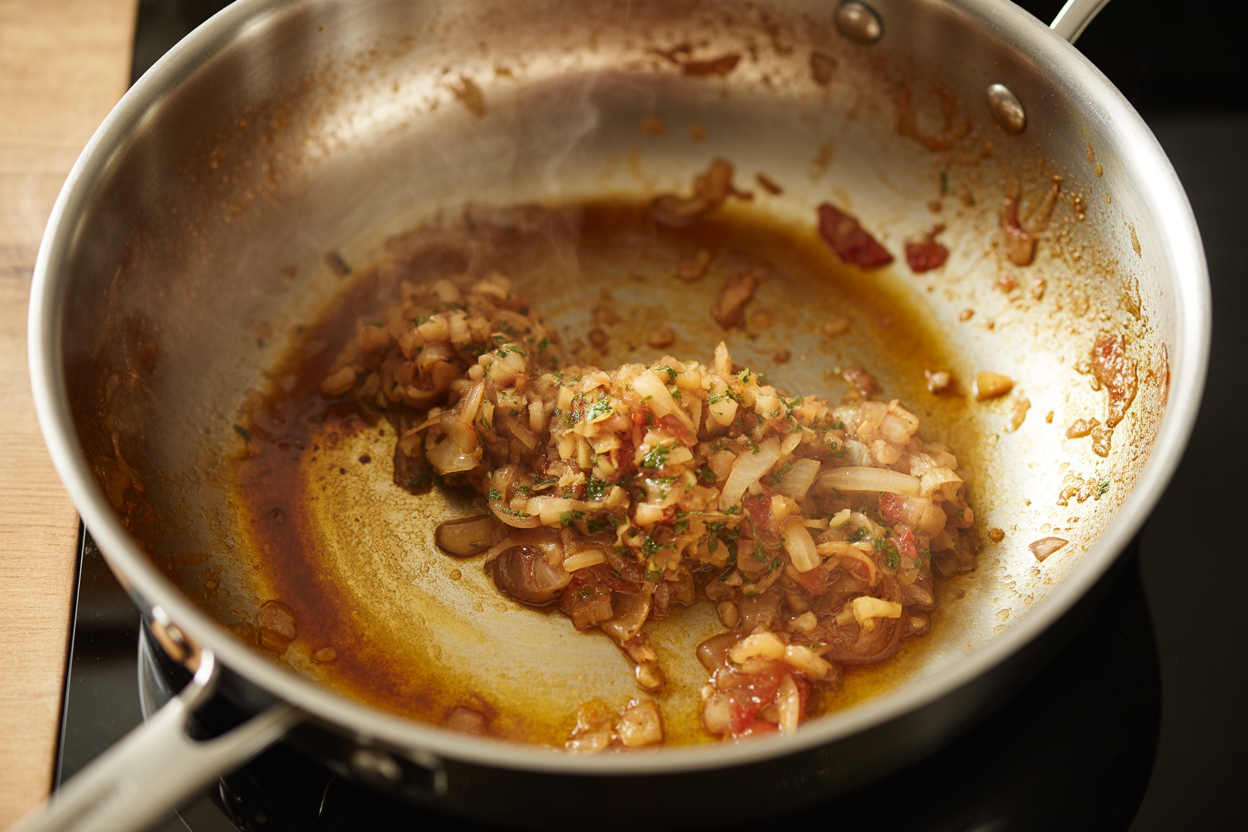
If you're making a pan sauce and you don't deglaze, you're leaving 40% of the flavor stuck to the bottom of your pan. That brown residue (the fond) is pure concentrated Maillard reaction product - the same chemical process that makes grilled steak taste better than boiled steak.
Here's what chefs do that most home cooks don't: they DELIBERATELY create fond. They sear proteins or aromatics in a dry-ish pan, let the bottom develop a brown layer, and THEN add liquid to dissolve it. Pour wine or stock into a hot pan with fond, scrape with a wooden spoon, and you've instantly created a sauce base with more depth than any amount of seasoning could add.
The fond principle applies beyond pan sauces. When making our Texas BBQ sauce, I saute the onions and garlic until they're deeply browned - not just softened - before adding liquid. Those extra 3 minutes of browning create a smoky, sweet base note that carries the entire sauce.
Layer 2: Aromatics at the Right Moment
Onions, garlic, shallots, ginger, lemongrass - these are aromatics, and WHEN you add them matters as much as what you add. Most recipes say "saute onions until translucent." But translucent onions taste completely different from caramelized ones, and both taste different from raw ones added at the end.
The chef's approach:
- Start of cooking (cooked aromatics): Deeply saute onions/shallots for a sweet, mellow base. This gives body and background sweetness. Takes 8-10 minutes, not the 3 minutes most home cooks give it.
- Middle of cooking (bloomed spices): Add dried spices to hot fat and cook for 30-60 seconds until fragrant. This "blooms" the volatile oils and makes spices taste 3-4x more intense than just dumping them into liquid. Every curry, every BBQ sauce, every chili benefits from this.
- End of cooking (fresh aromatics): Add garlic in the last 30-60 seconds. Add fresh herbs off the heat. Add citrus zest off the heat. These volatile aromatics lose their brightness with extended cooking. Adding them late preserves the pop.
This three-stage approach is why chimichurri uses raw garlic (bright, punchy) while Korean BBQ sauce uses cooked garlic (mellow, sweet). Same ingredient, completely different flavor contribution based on timing.
Layer 3: Acid at Multiple Stages
Home cooks tend to add acid (vinegar, citrus, wine) once. Chefs add it at least twice - sometimes three times - at different stages, and each addition does something different.
Early acid (cooking acid): Wine or vinegar added early and reduced. The volatile acids cook off, leaving behind mellow, complex flavor compounds. This is background depth. Reducing wine by half before building a cream sauce gives you richness that just adding wine at the end never achieves.
Late acid (brightening acid): A squeeze of lemon, a splash of vinegar, added right before serving. This is the "lift" that makes a sauce taste alive instead of flat. It's the single most impactful finishing technique in professional cooking. I add a teaspoon of apple cider vinegar to our Memphis BBQ sauce right before serving, and the difference is dramatic - it goes from "good" to "can't stop eating it."
The rule: if a sauce tastes "fine but boring," it almost certainly needs a hit of acid at the end. Start with half a teaspoon and taste. You'll be amazed.
Layer 4: Umami (The Invisible Depth Charge)
Umami is that savory, mouth-coating, almost meaty quality that makes you want another bite. Chefs stack umami sources deliberately. A single source (soy sauce) gives you one-dimensional saltiness. Multiple sources create depth that feels complex without being identifiable.
Common umami stacking in sauces:
- Soy sauce + fish sauce (our Thai peanut sauce uses both)
- Tomato paste + Worcestershire sauce (our Texas BBQ sauce)
- Parmesan rind simmered in the sauce + a splash of soy sauce
- Miso paste + mushroom stock
- Anchovy paste (dissolves invisibly) + tomato
The trick: umami sources should be invisible. If someone can taste the soy sauce in your BBQ sauce, you've added too much. You want the overall sauce to taste "deeper" and "more complex" without anyone being able to point to why. Half a teaspoon of fish sauce in a tomato-based sauce works miracles, and nobody will ever taste fish.
Layer 5: Fat as a Flavor Carrier
Fat doesn't just add richness - it's a solvent for flavor compounds that water can't dissolve. Many of the molecules that make herbs and spices taste the way they do are fat-soluble. If you add dried oregano to water, you get some flavor. Add it to hot olive oil first, and you get dramatically more, because the oil extracts and carries compounds the water would miss.
This is why finishing a sauce with butter ("mounting" in chef terms) doesn't just make it richer - it makes it taste more like itself. A tablespoon of cold butter whisked into a pan sauce at the very end carries all the dissolved flavors directly to your palate in a way that a water-based sauce can't.
Practical application: Bloom your spices in fat. Finish sauces with a small amount of good fat (butter, olive oil, sesame oil). Use fat strategically, not just for richness but as a flavor delivery system. For a deeper understanding of how fat interacts with acid and salt, see our guide on the role of fat, acid, and salt in sauces.
Layer 6: Reduction (Concentrating Everything)
Reduction is the simplest and most underused technique in home cooking. You simmer a sauce uncovered, water evaporates, and everything else gets more concentrated. Flavors intensify. The sauce thickens naturally. Sugars caramelize slightly, adding complexity.
The mistake most home cooks make: not reducing enough. When a recipe says "simmer until thickened," most people stop at 10 minutes. A chef would go 25. The difference in flavor depth is enormous. Our teriyaki sauce goes from thin and simple to thick, glossy, and deeply savory through reduction alone - no added thickeners needed.
Putting It All Together
You don't need all six layers in every sauce. But being aware of them changes how you cook. Next time a sauce tastes flat, ask yourself: Did I build fond? Did I bloom my spices? Did I add acid at the end? Did I reduce enough? Usually, one of those is the missing piece.
The goal isn't complexity for its own sake. It's making each ingredient contribute fully instead of just existing in the sauce. That's the real difference between a home cook's sauce and a chef's sauce - not better ingredients, but better extraction of flavor from the same ingredients.
Equipment Mentioned
TAGS
Related Articles
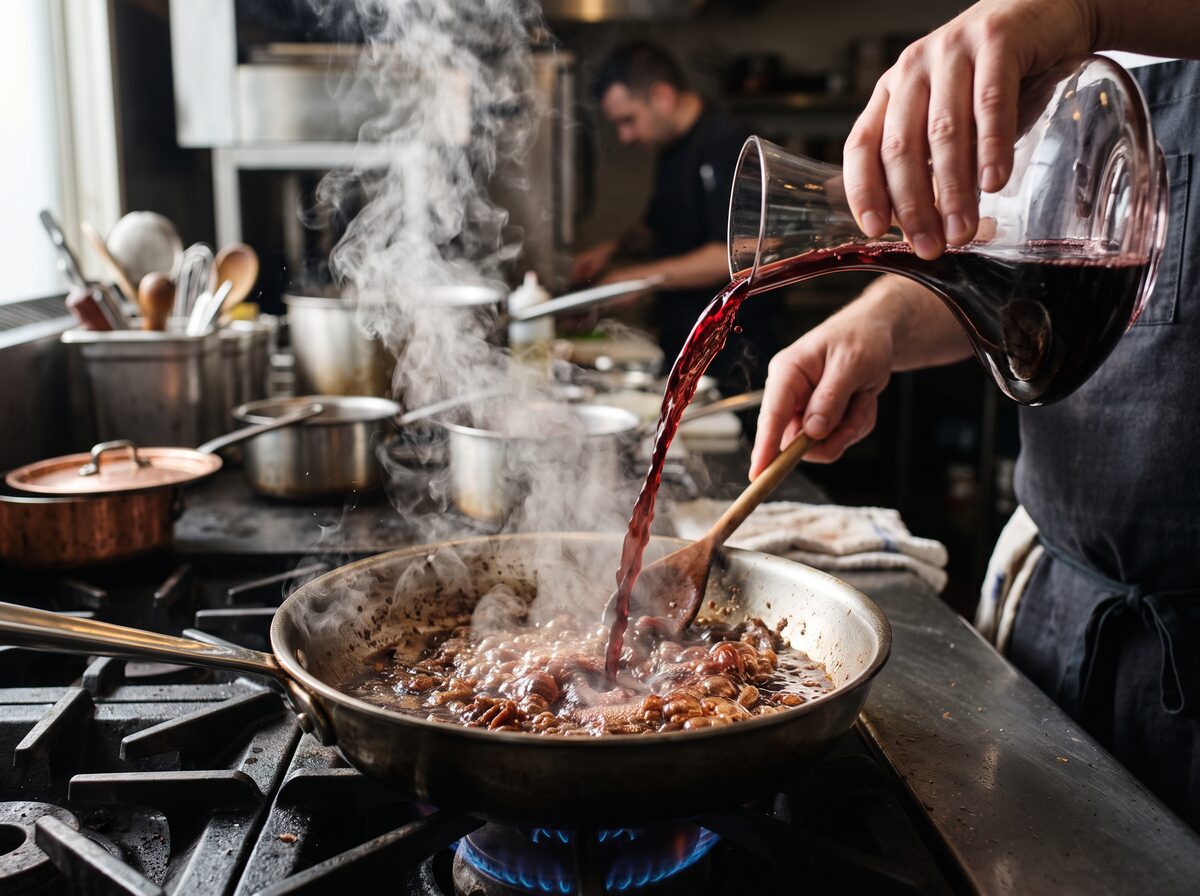
How to Deglaze Like a Pro: Unlocking Deep Flavor for Restaurant-Quality Sauces
Master deglazing to build rich, complex sauces at home. Step-by-step techniques, liquid choices, and chef tips for pro-level flavor every time.
How to Fix a Broken Sauce (Complete Guide)
Learn how to rescue broken, split, or curdled sauces! This comprehensive guide covers mayo-based, cream sauces, hollandaise, and more. Save your sauces from disaster with these expert techniques.
How to Thicken Sauces Naturally (7 Methods)
Discover 7 natural ways to thicken sauces without cornstarch! From reduction to roux, learn the best methods for every sauce type. No more watery sauces!
The Science Behind Emulsification (Explained Simply)
What actually happens when oil and water mix in a sauce, why it usually fails, and the handful of kitchen ingredients that make it work. No chemistry degree required.