How to Rescue Any Sauce (The Complete Guide)
Step-by-step rescue techniques for every common sauce disaster - split hollandaise, broken mayo, curdled cream sauce, oversalted, too thin, too thick, and more.
Written by FoodieManiac
With over 8 years of sauce-making experience, I've tested hundreds of techniques and products to bring you practical, reliable advice. Learn more about me →
No Sauce Is Beyond Saving (Usually)
I've rescued sauces that looked completely destroyed. Hollandaise that had fully separated into scrambled egg bits floating in yellow butter. Mayo that turned into oily soup. A cream sauce that looked like cottage cheese. Nearly all of them came back. The ones that didn't taught me what to do differently next time.
This guide covers every common sauce disaster and the specific, step-by-step technique to fix each one. Bookmark it. You'll need it eventually - we all do.
Rescuing Broken Mayonnaise and Aioli
What it looks like: Thin, soupy, with visible oil pooling. Or grainy and curdled-looking.
Why it happened: Oil was added too fast, overwhelming the emulsion. Or the ingredients were too cold (cold yolks emulsify poorly).
The fix (works 95% of the time):
- Crack a fresh egg yolk into a CLEAN bowl. Add 1 teaspoon of water. Whisk until slightly frothy.
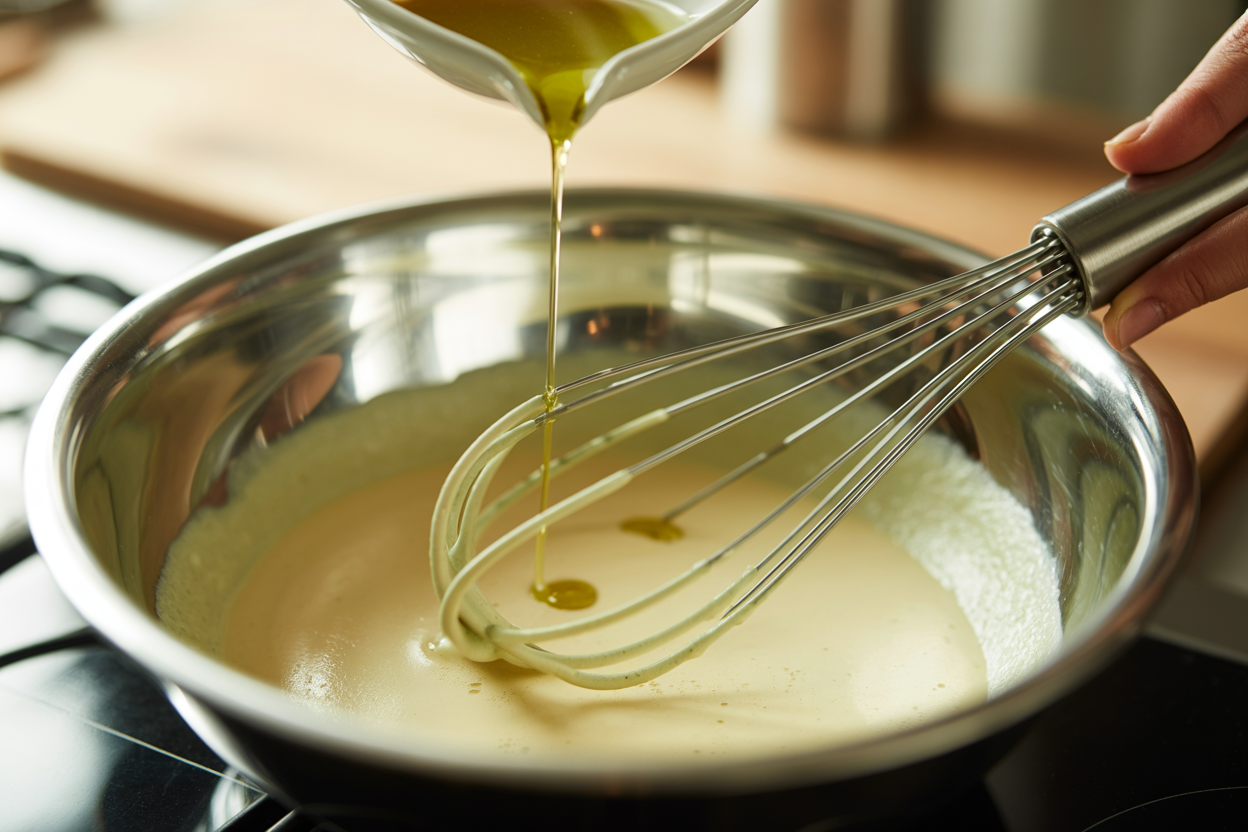
- Very slowly - literally drop by drop - whisk the broken mayo into the fresh yolk. Treat it as if it were oil, because functionally, it is. The fresh yolk provides a new supply of lecithin to re-coat all those escaped oil droplets.
- Once about a quarter of the broken mayo is incorporated and the new emulsion looks stable (thick and creamy), you can speed up to a thin stream.
This technique works for any broken cold emulsion: mayo, aioli, sriracha mayo, even garlic toum. The fresh yolk is the key - it's a fresh army of emulsifier molecules ready to do the work the first batch couldn't.
Rescuing Split Hollandaise and Bearnaise
What it looks like: The smooth, creamy sauce suddenly looks grainy, watery, or has visible butter pooling on top. In severe cases, you see actual scrambled egg bits.
Why it happened: Temperature went too high (above 70 C/158 F) and the egg proteins coagulated. Or butter was added too fast.
The fix for mild separation (sauce looks grainy but no visible egg bits):
- Remove from heat immediately.
- Add 1 tablespoon of ice-cold water.
- Whisk vigorously for 20-30 seconds. The cold water shocks the proteins and the mechanical force re-emulsifies the fat.
- If still broken, add another tablespoon of cold water and whisk again.
The fix for severe separation (visible egg bits, fully split):
- Strain the broken hollandaise through a fine mesh sieve to remove scrambled egg bits. What comes through is essentially warm flavored butter.
- In a fresh bowl, whisk a new egg yolk with 1 tablespoon of warm water over very gentle heat (or use a double boiler).
- Slowly drizzle the strained butter mixture into the new yolk, whisking constantly. You're rebuilding from scratch, but you're keeping all the flavor.
Rescuing Curdled Cream Sauces
What it looks like: Grainy texture. Small white lumps in an otherwise smooth sauce. Visible separation between liquid and solids.
Why it happened: Temperature was too high (cream proteins coagulated), acid was added while the sauce was too hot, or cream was added to a highly acidic reduction without tempering.
The fix:
- Remove from heat immediately.
- Add 2 tablespoons of cold heavy cream. Whisk gently but thoroughly.
- If still grainy, hit it with an immersion blender for 10-15 seconds. The mechanical force breaks apart protein clumps and re-distributes the fat. This works surprisingly well - it won't be perfect-smooth, but it'll be 90% of the way there.
- Strain through a fine mesh strainer as a last resort. You'll lose some volume but the sauce will be smooth.
For prevention, see our guide on why sauces break.
Rescuing Broken Vinaigrettes
What it looks like: Oil layer sitting on top of vinegar. Completely separated, like they were never mixed.
Why it happened: No emulsifier was used, or the vinaigrette sat too long. This is actually normal for vinaigrettes - they're temporary emulsions by nature.
The fix:
- Add 1/2 teaspoon of Dijon mustard to a clean bowl.
- Slowly whisk the broken vinaigrette into the mustard, starting drop by drop. The mustard's mucilage provides the emulsifier the original dressing was missing.
- Alternatively: pour the broken dressing into a jar with a tight lid and shake vigorously for 15 seconds. If it had mustard in the original recipe, this usually works on its own.
Our balsamic vinaigrette recipe includes mustard specifically to prevent this. If you're making a vinaigrette and the recipe doesn't include an emulsifier, add one - it makes all the difference.
Rescuing a Seized Cheese Sauce
What it looks like: Cheese formed a rubbery clump in the pan instead of melting into a smooth sauce. Or the sauce went from smooth to grainy and oily.
Why it happened: Heat was too high when cheese was added. Cheese proteins seize and squeeze out fat above roughly 65 C (150 F).
The fix:
- Add a splash of the sauce's liquid base (milk, cream, stock) - about 2 tablespoons.
- Reduce heat to the lowest setting.
- Stir constantly with a wooden spoon, scraping the seized cheese off the bottom.
- Add sodium citrate if you have it (1/4 teaspoon per cup of sauce). Sodium citrate is what makes processed cheese melt smoothly - it prevents casein from clumping. You can buy it online cheaply.
- If you don't have sodium citrate, a teaspoon of cornstarch whisked into a tablespoon of cold milk, then stirred in, helps by physically separating protein strands.
Rescuing an Over-Salted Sauce
The fix depends on the sauce type:
- Liquid sauces (BBQ, tomato, pan sauces): Add more of the base liquid (stock, crushed tomatoes, water) to dilute. Then add a teaspoon of sugar or honey to mask remaining saltiness. Acid (lemon juice, vinegar) also helps by distracting your palate from the salt.
- Cream-based sauces: Add more cream or milk. Dairy fat coats the tongue and reduces salt perception.
- Thick sauces and dips: Add a starchy element (mashed potato, breadcrumbs, cooked rice) that absorbs salt without changing the flavor profile significantly.
The potato trick (simmering a raw potato in the sauce) is a myth - potatoes absorb water, not salt selectively. Just dilute with more base ingredients. For a deeper dive, see our dedicated article on fixing over-salted sauces.
Rescuing a Sauce That's Too Thin
Quick fixes ranked by speed:
- Reduce it (best flavor): Simmer uncovered over medium heat. The water evaporates, flavors concentrate, sauce thickens naturally. This is almost always the best option.
- Cornstarch slurry (fastest): Mix 1 teaspoon cornstarch with 1 tablespoon cold water. Stir into simmering sauce. It thickens in about 60 seconds. Don't use more than needed - too much cornstarch gives a gummy texture.
- Butter (for pan sauces): Whisk in cold butter one tablespoon at a time off the heat. The butter emulsifies into the sauce, thickening it while adding richness.
- Roux addition: Make a quick roux (equal parts butter and flour, cooked 2 minutes). Whisk into the sauce. Best for gravies and cream sauces like our KFC gravy copycat.
Rescuing a Sauce That's Too Thick
This is the easy one. Add liquid. But add the RIGHT liquid:
- Stock for savory sauces (adds flavor, not just water)
- Cream or milk for cream-based sauces
- Citrus juice for vinaigrettes and dressings (adds acid AND thins)
- Water only as a last resort (dilutes flavor)
Add 1 tablespoon at a time, stirring between each, until you reach the consistency you want. It's much easier to thin a sauce than to re-thicken an over-thinned one.
The One Rule for All Sauce Rescues
Act immediately. The moment you notice something going wrong - grainy texture, visible separation, sudden thickening - pull the pan off the heat. Every second of continued cooking makes the problem worse. Off the heat, you have time to think and apply the right fix. On the heat, damage compounds exponentially.
And remember: a rescued sauce that tastes great is a perfectly good sauce. Nobody eating your food knows (or cares) that it broke halfway through. All that matters is what's on the plate.
Equipment Mentioned
TAGS
Related Articles
How to Deglaze Like a Pro: Unlocking Deep Flavor for Restaurant-Quality Sauces
Master deglazing to build rich, complex sauces at home. Step-by-step techniques, liquid choices, and chef tips for pro-level flavor every time.
How to Fix a Broken Sauce (Complete Guide)
Learn how to rescue broken, split, or curdled sauces! This comprehensive guide covers mayo-based, cream sauces, hollandaise, and more. Save your sauces from disaster with these expert techniques.
How to Thicken Sauces Naturally (7 Methods)
Discover 7 natural ways to thicken sauces without cornstarch! From reduction to roux, learn the best methods for every sauce type. No more watery sauces!
The Science Behind Emulsification (Explained Simply)
What actually happens when oil and water mix in a sauce, why it usually fails, and the handful of kitchen ingredients that make it work. No chemistry degree required.