Marinara vs. Tomato Sauce: Key Differences and When to Use Each
Confused about marinara and tomato sauce? Learn their differences, best uses, and tips to choose the right sauce for pasta, pizza, and more.
Written by FoodieManiac
With over 8 years of sauce-making experience, I've tested hundreds of techniques and products to bring you practical, reliable advice. Learn more about me →
Marinara vs. Tomato Sauce: Key Differences and When to Use Each
Okay, let’s clear something up: not every red sauce out there is “marinara.” I thought I knew the difference until the first time I tried to make lasagna and ended up with a watery, bland disaster. I’m still haunted by that runny mess. So if you’ve ever wondered whether you should reach for marinara or tomato sauce for pizza, pasta, or dunking your mozzarella sticks, you’re not alone – and you’re in the right place.
What Actually Is Marinara?
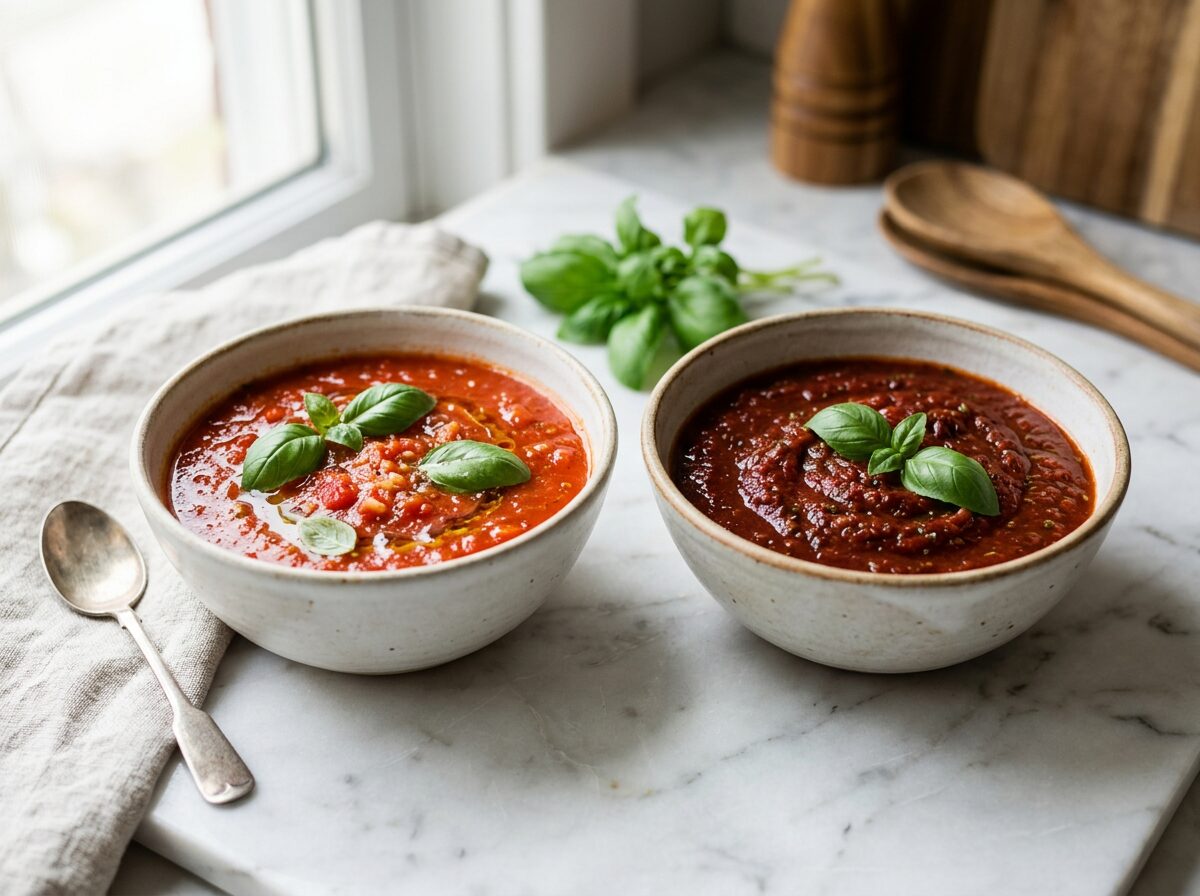
Marinara is the fast, fresh tomato sauce of Italian-American dreams. It’s usually made with just a few ingredients: tomatoes, garlic, olive oil, salt, and sometimes a pinch of chili flakes or a couple of basil leaves. That’s it. No meat, no hours of simmering, no complicated steps. Think of it as the “weeknight red sauce” – you can make it in 30-40 minutes tops (sometimes less if you’re in a rush or you like it a bit chunky).
I can’t count how many times I’ve thrown this together when “there’s nothing for dinner.” The flavor is bright and tomato-forward, with a hint of garlic and a little herbal lift if you’ve got fresh basil. It’s the perfect sauce for spaghetti, dipping fry sauce slathered breadsticks, or spooning over chicken parm. If you want to know how chefs really build flavor in simple sauces like this, check out How Chefs Build Flavor in Sauces (The Layering Method) – it’s a gamechanger.
How Marinara Is Made (And What Goes Wrong)
Marinara is basically sautéing garlic in olive oil (don’t walk away – garlic burns in seconds), adding whole canned tomatoes (San Marzano if you can, but honestly, any decent canned tomato works), squishing them with your hands or a spoon, seasoning with salt and maybe a pinch of chili flakes, and letting it bubble for 20-30 minutes. I’ve burned the garlic. I’ve made it too salty. I’ve even forgotten to add olive oil once – don’t do that. The oil is where the flavor lives.
If you want a lusher, creamier red sauce (like for a dip), try my Thermomix Creamy Sun-Dried Tomato Pasta Sauce or the Creamy Sun-Dried Tomato Basil Dip. But for classic marinara, keep it simple and don’t overthink it.
What Is Tomato Sauce? (It’s Not Just “Any” Red Sauce)
This is where it gets confusing. In Italy, “sugo di pomodoro” or “salsa di pomodoro” can mean all sorts of cooked tomato sauces. In the US, “tomato sauce” usually means a smooth, longer-simmered, deeper-flavored red sauce. It can have onion, carrots, celery (the holy trinity for sweetness), garlic, dried herbs, sometimes a splash of wine, and it’s simmered low and slow – 45 minutes to two hours. It’s often blended or strained for a silky texture.
I used to think tomato sauce was just “marinara but cooked longer.” That’s not quite right. Tomato sauce is richer and less punchy. It’s what you want for lasagna, baked ziti, or as the base for a classic paprikás mártás (Hungarian paprika sauce). It’s also the one to use for pizza if you want that old-school pizzeria flavor.
What Goes In Tomato Sauce?
Most classic recipes start with sweating onions (and maybe carrots and celery) in olive oil or butter. Add garlic (but don’t burn it – it turns bitter instantly), then tomato paste for depth. Pour in strained or crushed tomatoes, salt, dried oregano, and a pinch of sugar (if your tomatoes are tart). Simmer. Taste. Simmer more. Sometimes I add a Parmesan rind if I have one. It’s not necessary, but it really bumps up the umami. If you’re after a sauce that’s a little different, try blending in roasted veggies or check out how to infuse sauces with herbs and spices in this guide.
Marinara vs. Tomato Sauce: The Key Differences
- Time: Marinara is quick (20-40 minutes). Tomato sauce is slow (45-120 minutes).
- Ingredients: Marinara is minimal (tomatoes, garlic, oil, salt, maybe basil). Tomato sauce is complex (add onion, carrot, celery, tomato paste, herbs, sometimes wine or Parmesan).
- Texture: Marinara is chunky or rustic. Tomato sauce is smooth and velvety – usually blended.
- Flavor: Marinara is fresh, bright, and acidic. Tomato sauce is mellow, sweet, and deep.
- Uses: Marinara is for dipping, quick pastas, pizza, and lighter dishes. Tomato sauce is for baked pastas, hearty meatballs, Sunday gravy, or any dish that needs a “big” sauce.
Here’s what surprised me: if you use marinara in a lasagna, you’ll probably end up with a watery, bland result. But if you try to use a heavy tomato sauce for a simple spaghetti night, it can feel too rich and take over the noodles. It’s not about “better” – it’s about the right sauce for your dish.
When to Use Marinara (And When Not To)
If you want a sauce that tastes like sun-ripened tomatoes and fresh basil, and you don’t have much time, marinara is the move. Here’s when I grab it:
- Spaghetti or penne with just sauce and cheese
- Eggplant or chicken parm (but not for heavy, baked casseroles)
- Pizza (especially Neapolitan-style, where the sauce stays light)
- Dipping fried stuff (mozzarella sticks, arancini, garlic bread)
Don’t use marinara for baked pastas that need a sturdy, thick sauce. It’ll get watery. And don’t use it as a base for meat sauces – it’s too delicate. If you want to see how sauces can go wrong (and how to fix them before serving), this guide is gold.
When to Use Tomato Sauce
Tomato sauce is my go-to for:
- Lasagna, baked ziti, or any baked pasta
- Meatballs (especially if you simmer them in the sauce)
- Pizza with lots of toppings (it won’t get lost)
- Heavier dishes that need a “saucy” element – think stuffed peppers or eggplant rollatini
It’s also what you want if you’re making a sauce in advance to freeze. Tomato sauce actually tastes better the next day, while marinara loses its brightness. If you ever find your sauce gets greasy or separates, here’s why that happens and how to fix it.
What About The “Easy Jarred Stuff”?
Look, I’m not above using a good jarred marinara or tomato sauce. Not all brands are equal. For marinara, look for something with just tomatoes, olive oil, garlic, and basil. For tomato sauce, it’s okay if it has onion, carrot, or wine. Avoid anything with sugar as the first or second ingredient – it’ll taste flat. And if you want to doctor it up, a splash of olive oil and a handful of fresh basil can work wonders.
If you want to make your own but don’t want to spend all day at the stove, my Thermomix Roasted Tomato Basil Sauce is a shortcut that actually tastes homemade. Store-bought stock is fine in sauces where you need a little depth, but skip the fancy olive oil – save it for salad dressings or for finishing, not cooking.
Tested Tips
- Don’t burn the garlic: Garlic goes from “fragrant” to “acrid” in seconds. I’ve ruined more marinara batches than I’ll admit by walking away. Add garlic to oil over medium or lower heat, and as soon as it smells amazing (about 30 seconds), dump in your tomatoes.
- Salt slowly: I used to just dump in a big pinch. Bad idea – you can’t un-salt a sauce. Start with half a teaspoon per 28-ounce can of tomatoes, let it simmer, then taste. Add more if needed.
- If it’s too tart: Some canned tomatoes are super acidic. A pinch of sugar (literally 1/4 teaspoon) or a pat of butter can round out the flavor. Don’t overdo it – you want bright, not dessert.
- The lid trick: If your sauce is reducing too fast (getting thick before the flavors come together), put the lid on halfway. I spent a year making sauces too thick before someone told me this.
- Blend for silky sauce: For tomato sauce, I use an immersion blender right in the pot after simmering. It’s less mess than a blender, and you can control the texture. Just don’t blend while it’s boiling hot – let it cool 5 minutes or you’ll wear it.
- Herbs at the end: If you’re using fresh basil or parsley, stir them in when you turn off the heat. If you add them early, the flavor disappears. Learned this the hard way – my sauce tasted like nothing.
Quick Ingredient Guide: What’s Worth It?
- San Marzano tomatoes: Worth it if you’re making marinara to really taste the tomatoes, but any decent-quality whole canned tomato works if you add a bit more salt and olive oil.
- Olive oil: Use extra virgin for finishing, but regular olive oil or even light olive oil is fine for cooking. Save the fancy stuff for dipping or salad (Homemade Greek Lemon-Oregano Vinaigrette is a great place for it).
- Fresh herbs: Worth it if you have them. Dried oregano is fine for tomato sauce, but fresh basil makes marinara sing.
- Parmesan rinds: Optional, but they add a ton of depth to tomato sauce. Just fish them out before serving.
What If My Sauce Splits, Gets Watery, or Tastes Flat?
I’ve had them all. If your sauce separates or gets greasy, you probably used too much oil or simmered too hard. Turn down the heat and whisk in a tablespoon of cold water. If your sauce is watery, simmer uncovered to reduce, or stir in a tablespoon of tomato paste. For flat flavor, check out The Role of Fat, Acid, and Salt in Sauces – a little acid or salt is usually what’s missing. And for a full rescue plan, here’s how to fix any sauce.
If you’re making a creamy tomato dip or sauce, and it splits, I’ve got a guide just for that: Why Your Cheese Sauce Turns Grainy – the lessons apply to more than just cheese.
Fun Ways to Use Up Extra Sauce
- Dip for everything: Use marinara for dunking breadsticks, fried ravioli, or even in a grilled cheese. Or try it instead of ketchup with fries, and pair with Copycat McDonald's Hot Mustard Sauce for a killer combo.
- Mix into creamy dips: Swirl leftover tomato sauce into Homemade Creamy Buffalo Blue Cheese Dip for a spicy-tangy twist.
- Make a quick shakshuka: Warm sauce in a skillet, crack in eggs, cover, and cook until the whites set. Serve with crusty bread.
- Spice things up: Add a spoonful of marinara to Authentic Turkish Ezme Sauce for a tomato boost, or use it as a base for a quick BBQ sauce by stirring in chipotle powder and brown sugar – or just try my Homemade Sweet Chipotle BBQ Sauce.
Marinara or Tomato Sauce: Which Should Be Your Go-To?
If you want fast, fresh, and bright, go marinara. If you want deep, slow-cooked flavor and sauce that stands up to cheese and layers, go tomato sauce. You can’t really swap one for the other and get the same effect – trust me, I’ve tried. But you don’t need to stress about getting everything perfect. Both are forgiving, both freeze well, and both will make your kitchen smell like you know what you’re doing, even if you’re winging it.
And if you want to branch out into other sauces that play with these flavors but go in a whole new direction, check out my favorite spicy tomato dip (Authentic Turkish Ezme Sauce) or my Thermomix Creamy Roasted Poblano Sauce for something totally different.
At the end of the day, it’s just sauce. Taste as you go, don’t burn your garlic, and remember – if you mess it up, there’s almost always a way to fix it. (And if you can’t, there’s always takeout.)
Want More Sauce Wisdom?
- How to Rescue Any Sauce (The Complete Guide)
- How Chefs Build Flavor in Sauces (The Layering Method)
- Why Your Pan Sauce Turns Out Greasy - Quick Fixes for Silky Results
- The Role of Fat, Acid, and Salt in Sauces
- Sauce Pairings for Vegetarians: How to Match Flavors With Plant-Based Dishes
Happy saucing! If you try something new (or burn the garlic), let me know – it happens to the best of us.
TAGS
Related Articles
How to Make 3-Ingredient Sauces: Fast, Flavorful Recipes for Any Meal
Discover easy 3-ingredient sauces you can whip up in minutes to elevate any dish—perfect for quick weeknight meals and busy home cooks.
How to Make 3-Ingredient Sauces in Under 5 Minutes (With Recipes)
Discover easy 3-ingredient sauces you can whip up in 5 minutes or less. Perfect for busy cooks—includes quick recipes and pairing tips.
Best Sauces for Pork: 12 Perfect Pairings for Chops, Tenderloin, and More
Discover 12 delicious sauces that pair perfectly with pork chops, tenderloin, ribs, and roasts. Elevate every pork dish with these expert sauce ideas.
Worcestershire Sauce vs. Soy Sauce: Flavor, Uses, and Substitutes Compared
Compare Worcestershire sauce and soy sauce—flavor, cooking uses, substitutes, and when to use each for the best results in your recipes.