How to Make Harissa Sauce: North Africa’s Fiery, Versatile Condiment
Learn how to make authentic harissa sauce at home, tips for balancing heat, and ways to use this spicy North African staple in everyday cooking.
Written by FoodieManiac
With over 8 years of sauce-making experience, I've tested hundreds of techniques and products to bring you practical, reliable advice. Learn more about me →
What Is Harissa? The Soul of North African Heat
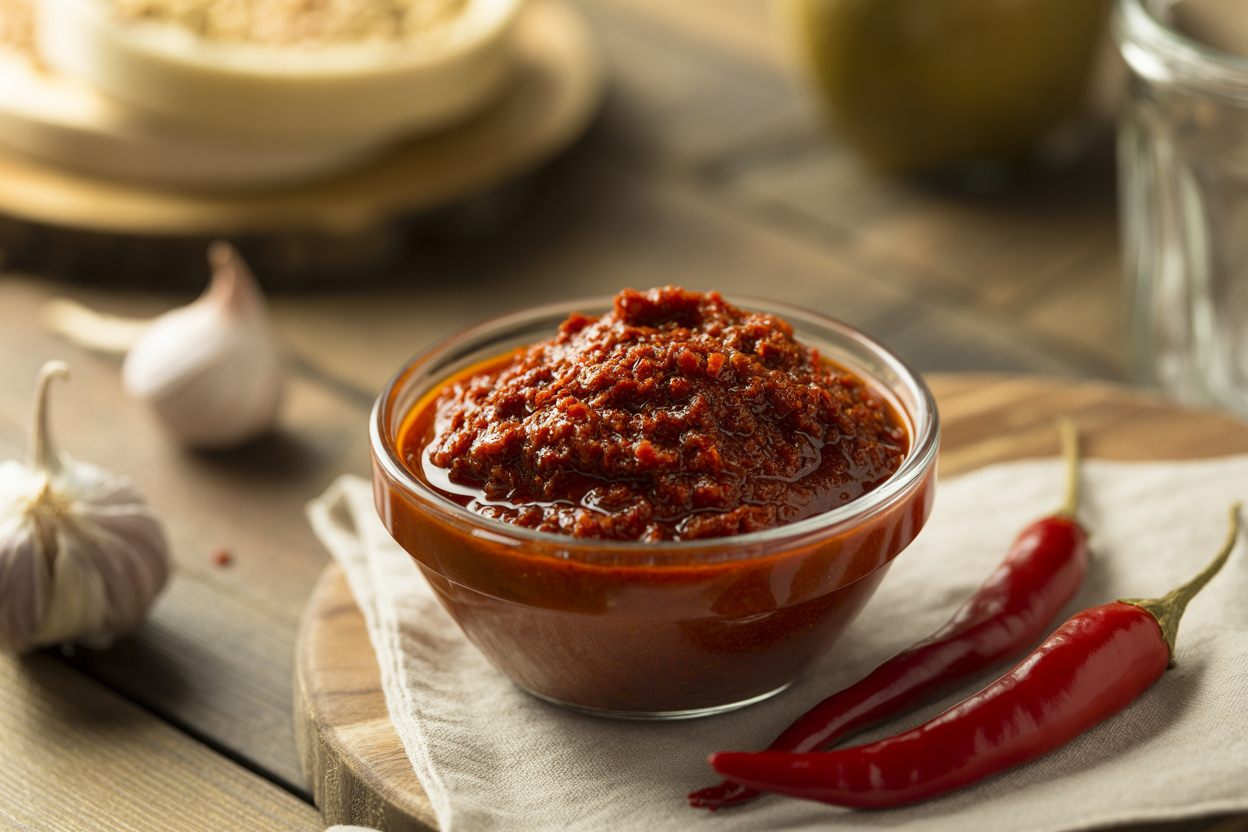
Harissa is a bold, aromatic chili paste hailing from North Africa, especially Tunisia, Morocco, and Algeria. Crafted from dried chilies, garlic, spices, and olive oil, harissa delivers a complex flavor profile—smoky, spicy, slightly sweet, and earthy. It’s a true staple for adding heat and depth to stews, roasted meats, vegetables, and even breakfast eggs. If you love world sauces like Moroccan Chermoula or Turkish Ezme, harissa’s versatility and punchy heat will earn it a permanent place in your fridge.
Essential Ingredients for Authentic Harissa
Traditional harissa recipes rely on a few key components:
- Dried Red Chilies: New Mexico, guajillo, or ancho chilies (about 60g dried, stems and seeds removed). The chili blend sets your heat level and flavor—use hot or mild varieties based on preference.
- Garlic: 4 large cloves for pungency and depth.
- Spices: 1 tsp each coriander seeds, cumin seeds, and caraway seeds for signature earthiness.
- Tomato Paste: 2 tbsp for body and umami (optional but recommended).
- Olive Oil: 60 mL (¼ cup) for richness, preservation, and mouthfeel.
- Lemon Juice or Vinegar: 1 tbsp for acidity and balance.
- Salt: 1 tsp or to taste for seasoning and preservation.
You can add smoked paprika, rose petals, or fresh herbs for regional variations. For a creamy, tangy alternative, try blending harissa into Creamy Roasted Jalapeño Ranch Dip or Roasted Red Pepper Feta Dip (Htipiti) to create fusion sauces.
Step-By-Step: How to Make Harissa Sauce
1. Selecting and Preparing Chilies
Choose 60g (about 2 oz) of dried red chilies. Remove the stems and most seeds (for less heat, remove all seeds). Toast chilies in a dry skillet over medium heat (180°C / 350°F) for 1-2 minutes until fragrant. Do not burn—the goal is to release essential oils, not char. Soak chilies in boiling water for 30 minutes, then drain thoroughly. Pat dry to prevent excess water from thinning your paste (see Why Your Homemade Sauce Turns Watery in the Fridge for more tips on water content in sauces).
2. Toasting Spices for Depth
In the same skillet, toast 1 tsp each cumin seeds, coriander seeds, and caraway seeds over medium-low heat for 2 minutes. Stir constantly until spices darken slightly and become aromatic. Transfer immediately to a mortar and pestle or spice grinder, and grind to a fine powder. Toasting is essential—raw spices taste flat and can make the sauce gritty.
3. Blending the Paste: Texture and Consistency
Combine soaked chilies, ground spices, 4 peeled garlic cloves, 2 tbsp tomato paste, 1 tsp salt, and 1 tbsp lemon juice or vinegar in a food processor. Pulse until a coarse paste forms, scraping down sides as needed. With the motor running, slowly drizzle in 60 mL (¼ cup) extra-virgin olive oil until the harissa becomes smooth and thick, but not runny. The ideal consistency is a spreadable, dense paste that holds its shape on a spoon. If too thick, add a few teaspoons of reserved chili soaking water or more oil. Avoid over-adding liquid—harissa should never be watery (refer to Why Your Sauce Gets Too Thick as It Cools for troubleshooting texture).
4. Final Taste Check and Storage
Taste and adjust salt, acid, or spice as needed. For more heat, add a pinch of cayenne; for more tang, a splash of extra lemon juice. Transfer harissa to a sterilized glass jar, cover the surface with a thin layer of olive oil, and refrigerate. Harissa keeps for up to 4 weeks if always covered with oil. For longer storage, freeze in small portions (see How to Freeze Sauces for Maximum Freshness).
Harissa Variations: Regional Twists and Flavor Additions
- Moroccan-Style: Add 1 tsp smoked paprika and a handful of fresh cilantro to the blend for herbaceous notes. Try as a marinade for meats, similar to Chermoula.
- Tunisian-Style: Include 1-2 tbsp rose water or a few dried rose petals for subtle floral complexity.
- Smoky Harissa: Char fresh red bell pepper over an open flame, peel, and blend in for sweetness and body.
- Quick Blender Harissa: Substitute 3-4 fresh Fresno or red jalapeño chilies for dried; reduce soaking time to 5 minutes in hot water. This makes a brighter, slightly less intense paste—good for mixing into creamy dips like Creamy Sriracha Mayo.
How to Use Harissa Sauce: Applications and Pairings
- Marinade: Mix 2 tbsp harissa with 2 tbsp olive oil and 1 tbsp lemon juice. Coat chicken thighs or lamb and marinate at least 2 hours (or overnight, max 24 hours; longer marination can overpower delicate proteins).
- Finishing Sauce: Swirl 1-2 tsp into soups, stews, or shakshuka just before serving for a spicy kick. Add after cooking to preserve aromatics.
- Sandwich Spread: Blend 1 part harissa with 2 parts mayonnaise or yogurt for a spicy sandwich spread. Try with grilled vegetables or roasted meats.
- Grain Bowls: Stir into cooked couscous, quinoa, or farro—see our guide on How to Pair Sauces With Grains for more ideas.
- Dips and Mezze: Mix 1 tbsp harissa into hummus or labneh, or use as a topping for Lebanese Toum or Htipiti for spicy mezze platters.
- Eggs: Drizzle over poached or fried eggs just off the heat for a breakfast with bite.
Actionable Tips for Perfect Harissa Every Time
- Spice Toasting: Never skip toasting. Even a 60-second toast at 180°C/350°F unlocks hidden oils and aroma.
- Chili Selection: For mild harissa, blend guajillo and New Mexico chilies (ratio 2:1). For more heat, add a few arbol chilies or substitute half with dried Thai chilies.
- Food Processor vs. Mortar: Mortar and pestle yields a rustic, chunkier harissa—ideal for traditionalists. Food processor creates a smoother paste, best for spreading or mixing into other sauces.
- Oil Preservation: Always cover the surface of harissa with olive oil before refrigerating. This prevents air contact, extends shelf life, and maintains color and flavor.
- Batch Scaling: Double the recipe for freezing. Freeze in ice cube trays, transfer cubes to a zip-top bag, and thaw portions as needed for instant flavor boosts.
- Acid Balance: Taste for brightness before finishing. If harissa tastes flat or dull, adjust with small additions of lemon juice or vinegar (¼ tsp at a time).
Common Mistakes and How to Avoid Them
- Watery Texture: Squeeze soaked chilies dry before blending. If your harissa separates or becomes watery in the fridge, refer to Why Your Homemade Sauce Turns Watery in the Fridge for fixes.
- Bitter Flavor: Over-toasted or burned spices can impart bitterness. Toast just until aromas bloom, not until smoking.
- Metallic Taste: Avoid using reactive metal containers (such as aluminum) for storage, as the acidic ingredients can react and alter flavor.
- Insufficient Salt: Salt is both a flavor enhancer and a preservative. If your harissa tastes “muddy,” a little extra salt can sharpen flavors and extend fridge life.
- Oil Separation: Natural in homemade sauces. Simply stir before use; for more on this, see Why Do My Homemade Sauces Separate in the Fridge?
Harissa vs. Other Spicy Sauces: When to Use Each
Harissa stands out for its earthy, smoky undertones and thicker paste texture, as opposed to the vinegar-forward bite of hot sauces or the creamy tang of sriracha mayo. Use harissa when you want heat plus complexity—perfect for North African and Mediterranean dishes. For a fruitier, sweet-heat BBQ, try Homemade Spicy Pineapple BBQ Sauce or Spicy Maple Bourbon Glaze. If you prefer herb-centric sauces, explore Moroccan Chermoula or Argentine Chimichurri. For creamy, garlicky heat, Toum is ideal (see our guide How to Make Toum: Lebanon’s Fluffy Garlic Sauce Explained Step-by-Step).
Serving and Storage: Keep Your Harissa Vibrant
Refrigeration and Shelf Life
Store harissa in a sterilized glass jar, always covered with a thin layer of olive oil. Keep refrigerated up to 4 weeks. If the paste darkens or develops off odors, discard immediately (see Why Your Homemade Sauce Smells Off in the Fridge for spoilage signs). To serve, always use a clean spoon to prevent contamination.
Freezing for Long-Term Use
For best results, freeze harissa in an ice cube tray, then transfer cubes to a freezer bag. Keep frozen up to 6 months. Thaw cubes in the fridge overnight or melt directly into hot dishes for instant flavor boosts. For freezing tips and mistakes to avoid, review How to Freeze Sauces for Maximum Freshness.
Creative Ways to Use Harissa: Beyond the Basics
- Pasta Sauce: Stir 2 tbsp harissa into a creamy béchamel or tomato sauce for a North African-inspired pasta.
- BBQ Glaze: Mix 1 part harissa with 2 parts honey or date syrup, and brush onto grilled chicken or vegetables in the last 5 minutes of cooking at 200°C / 400°F.
- Burger Spread: Combine harissa with mayo, garlic, and lemon for a spicy burger topping (see inspiration from Copycat Big Mac Sauce or Shake Shack Sauce).
- Dip Base: Swirl harissa into creamy dips—don’t miss our Creamy Roasted Jalapeño Ranch Dip or Roasted Red Pepper Feta Dip (Htipiti) for fusion ideas.
- Vegetable Roasting: Toss carrots, cauliflower, or potatoes with olive oil and 1-2 tbsp harissa before roasting at 220°C / 425°F for 30-40 minutes until caramelized.
Harissa Sauce Troubleshooting: FAQs and Pro Tips
- Can I use fresh chilies? Yes, but the flavor is brighter and less smoky. Use 100g fresh red chilies, seeded and chopped, and reduce soaking time.
- My harissa is too spicy! Blend in more roasted red pepper or tomato paste, and balance with extra olive oil or yogurt.
- How can I use leftover harissa? Fold into scrambled eggs, whisk into salad dressings, or stir into soups and stews at the end of cooking.
- How do I avoid bitterness? Don’t burn spices; use fresh, high-quality olive oil and avoid excessive citrus zest, which can be bitter.
Further Reading and Sauce Mastery
- How to Make Toum: Lebanon’s Fluffy Garlic Sauce Explained Step-by-Step
- Why Your Sauce Gets Too Thick as It Cools - Causes and How to Fix It
- Why Your Homemade Sauce Turns Watery in the Fridge - Causes and Fixes
- How to Freeze Sauces for Maximum Freshness: Methods, Tips, and Mistakes to Avoid
Conclusion: Unlock North African Flavor in Your Kitchen
Harissa is more than a hot sauce—it’s a flavor-packed condiment that brings smoky heat, vibrant color, and aromatic depth to nearly any dish. Mastering harissa opens doors to a world of North African and Mediterranean cuisine, and the techniques here will help you create a sauce that rivals the best jarred versions. Whether you’re spreading it on sandwiches, swirling into dips, or glazing meats, harissa delivers unmatched versatility. For further sauce experiments, try pairing harissa with recipes like Homemade Spicy Pineapple BBQ Sauce, Authentic Moroccan Chermoula Sauce, or Creamy Roasted Jalapeño Ranch Dip to build your ultimate condiment collection.
TAGS
Try These Recipes
Related Articles
How to Make Zhoug Sauce: Yemen’s Spicy, Herbaceous Green Condiment
Discover how to make authentic Zhoug sauce at home. This Yemeni green condiment adds bold, spicy flavor to meats, veggies, grains, and more.
How to Make Copycat Chick-fil-A Sauce at Home (Step-by-Step Recipe)
Recreate the iconic Chick-fil-A Sauce at home! This easy copycat recipe delivers that sweet, smoky, tangy flavor with common pantry ingredients.
How to Make Romesco Sauce: Spain's Bold, Nutty Condiment Explained
Learn to make authentic Spanish romesco sauce at home. Step-by-step recipe, tips, and pairing ideas for this smoky, nutty, and versatile condiment.
How to Make Copycat Big Mac Sauce: The Secret to Classic Burger Flavor
Recreate McDonald's legendary Big Mac sauce at home! Step-by-step recipe, tips, and variations for the perfect burger condiment every time.