Alfredo vs. Carbonara Sauce: How to Tell Them Apart and When to Use Each
Confused by Alfredo and Carbonara sauces? Learn the key differences, best uses, and how to avoid common mistakes when making each classic pasta sauce.
Written by FoodieManiac
With over 8 years of sauce-making experience, I've tested hundreds of techniques and products to bring you practical, reliable advice. Learn more about me →
Alfredo vs. Carbonara Sauce: How to Tell Them Apart and When to Use Each
Let’s clear the air: Alfredo and carbonara are not just two creamy pasta sauces you can swap out on a whim. I learned this the hard way years ago, when I tried to “wing it” and used cream in carbonara. My Italian friend almost spat out her wine. If you’ve ever wondered why your Alfredo tastes like mac and cheese or why your “carbonara” just seems... off, you’re in the right place. I’ve messed these up plenty of times, so you don’t have to.
What Actually Is Alfredo Sauce?
First off, “Alfredo” in Italy is just pasta tossed with butter and Parmesan. That’s it. No cream, no garlic, just a ton of butter and cheese. In the US (and, honestly, in my kitchen when I want comfort food), Alfredo usually means a creamy white sauce made with heavy cream, butter, and Parmesan. Sometimes garlic sneaks in, sometimes not.
If you want the real-deal Italian version, you’re looking at fettuccine, unsalted butter (about 4 tablespoons per half pound of pasta), and a big handful of grated Parmigiano-Reggiano. Toss the hot pasta right into the butter, sprinkle in the cheese, splash some pasta water, and stir frantically. It’s more of an emulsion than a sauce. But if you want what’s on restaurant menus? That’s American Alfredo, and it’s a rich, thick, creamy blanket. I’m not above it. It’s deeply satisfying. Let’s not be snobs.
What Goes in American-Style Alfredo?
- Butter (I use salted, even if purists faint)
- Heavy cream (about 1 cup per pound of pasta)
- Parmesan cheese (the good stuff if you can swing it, but pre-grated is fine for Tuesday night)
- Salt and black pepper (start with 1/2 teaspoon salt, then taste before adding more - you can’t rescue it once it’s over-salted)
- Optional: Garlic (one clove, minced, if you’re into that)
Everything melts together in a pan, then you throw your just-cooked pasta in and toss it all to coat. If it’s too thick, add a splash of pasta water. If it’s too thin, simmer for a few minutes - but keep an eye on it. I’ve burned more Alfredo than I care to admit by getting distracted.
What Makes Carbonara Different?
This is where people get nervous. Carbonara is not just Alfredo with bacon. It’s a sauce built from eggs, cheese, cured pork, and black pepper. There is no cream in classic carbonara. I know you see it in recipes online, but trust me - Italians will chase you out of town with wooden spoons.
The magic of carbonara is in the timing and the heat. The eggs and cheese form a glossy, luscious sauce that clings to each strand of pasta. Mess up the timing and you end up with scrambled eggs. Been there, done that, ate it anyway.
What Goes in Carbonara?
- Pasta (spaghetti, rigatoni, or bucatini - I usually go with spaghetti)
- Guanciale (cured pork jowl is traditional, but pancetta is a good substitute; bacon works in a pinch, but it’s smokier)
- Eggs (1 whole egg plus 1 yolk per person is my go-to ratio)
- Pecorino Romano (sharper than Parmesan; if you only have Parm, it’ll work, but the flavor isn’t the same)
- Lots of black pepper (freshly cracked - pre-ground is bland and sad)
You cook the pork until crisp, then toss hot pasta right in. Off the heat, add your egg and cheese mixture, stirring like mad so the residual heat cooks the eggs just enough. No cream, no garlic, no butter (the pork fat does all the heavy lifting). If you want to understand why sauces break, try making carbonara on too high heat. It’ll teach you fast.
How to Tell Alfredo and Carbonara Apart (Without Tasting)
I can spot the difference just by looking - and smelling. Here’s how you can too:
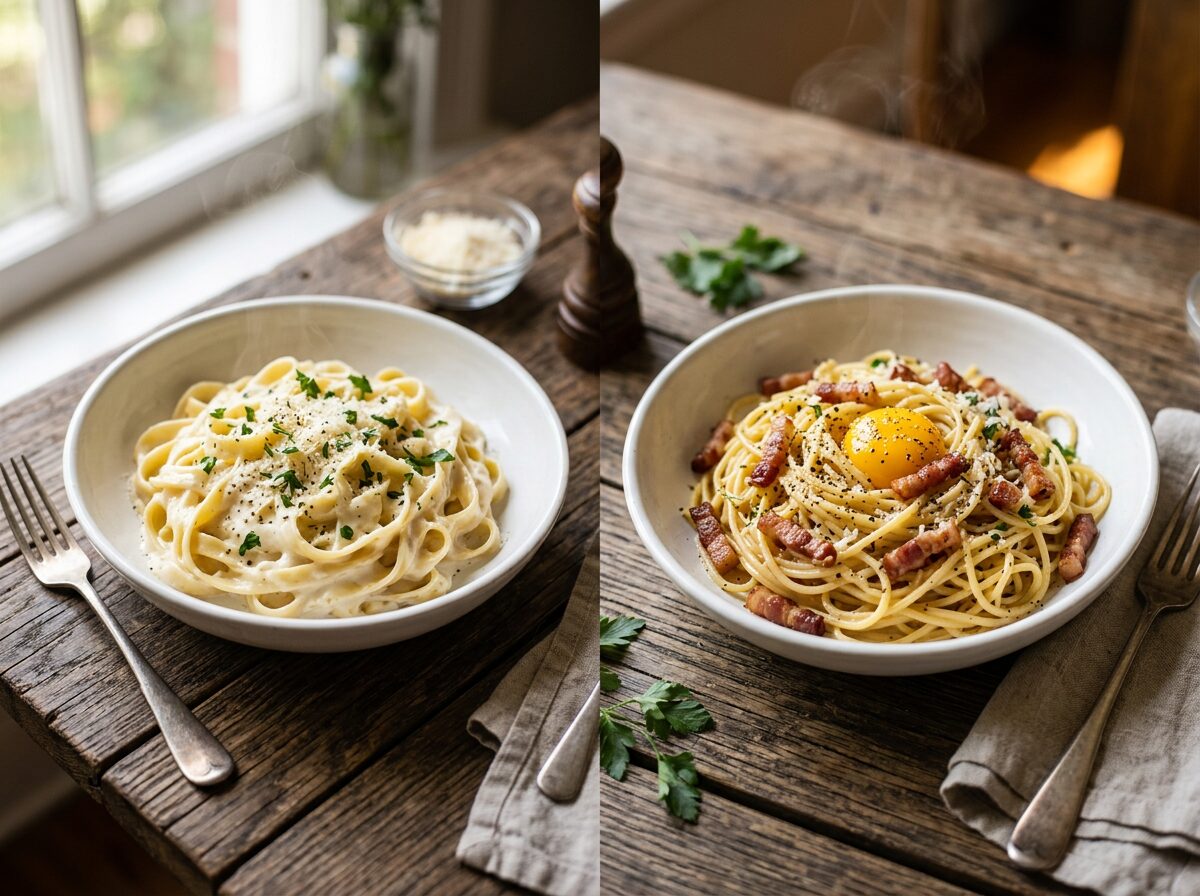
- Color: Alfredo is bright white and creamy. Carbonara is more yellow, with flecks of black pepper and bits of pork.
- Texture: Alfredo is thick, smooth, and coats the pasta like a blanket. Carbonara is silkier, sometimes a bit glossy, and tends to pool less.
- Smell: Alfredo smells like cream and cheese. Carbonara smells like porky heaven with a peppery kick.
- What’s in it: If you see bacon (or guanciale) and lots of visible pepper, it’s carbonara. If it’s just creamy white and cheesy, it’s Alfredo.
I once took a bite of what I thought was Alfredo at a potluck and got a mouthful of eggy, peppery carbonara. Not a bad surprise, but definitely not what I expected.
When to Use Each Sauce (And What Goes Wrong If You Don’t)
Alfredo Sauce: When Creamy Comfort Is the Goal
Alfredo is for those days when you want something rich, cozy, and uncomplicated. It’s perfect on wide noodles like fettuccine, but don’t stop there - I’ve used it on gnocchi, poured over roasted broccoli, even as a pizza base. It’s also a good “blank canvas” for adding cooked chicken, shrimp, or peas.
If you use Alfredo where you want carbonara’s salty, porky punch, it’ll taste bland and one-note. I tried Alfredo on carbonara’s classic spaghetti-and-guanciale combo once. It was edible, but underwhelming. The reverse is also true - carbonara on fettuccine Alfredo’s usual add-ins (like grilled chicken) is just weird.
Carbonara: When You Want Salty, Savory, and a Bit of Drama
Carbonara is for when you want to impress but don’t have a lot of time. It’s deeply flavorful, with that umami you only get from good pork and cheese. It honestly doesn’t need anything else - skip the chicken, skip the veggies. The sauce is the star.
What goes wrong? Well, if you try to “lighten it up” with less egg or skip the pork, you lose the magic. Also, don’t try to reheat carbonara in the microwave unless you want scrambled eggs on noodles. If you need a sauce that holds up to reheating or meal prep, Alfredo is more forgiving.
Tested Tips
- Keep the heat low for carbonara: If you add the egg mixture while the pan is too hot, you’ll scramble the eggs. I’ve done this more times than I’ll admit. To rescue it, add a splash of pasta water and stir like crazy off the heat - sometimes it smooths out.
- Save your pasta water: Both sauces benefit from the starchy pasta water. It helps thin Alfredo if it’s too thick and gives carbonara a glossy finish. I’ve forgotten to save it and had to use plain water - not as good, but works in a pinch.
- Don’t buy pre-shredded cheese (if you can avoid it): It doesn’t melt as well and can make your sauce grainy. But honestly, if it’s all you have, just grate it finer and add it slowly. If you do get a grainy sauce, check out this guide on fixing grainy cheese sauces.
- Stir constantly: For Alfredo, keep the sauce moving so it doesn’t scorch. For carbonara, stir fast when you add the eggs so they form a sauce, not curds. If you walk away, you’ll probably regret it. (Ask me how I know.)
- Use what you have: Guanciale is amazing but pricey and hard to find. Pancetta is a solid swap. Bacon works but will taste smokier. I’ve even used turkey bacon in a pinch. It’s not authentic, but it’s still tasty.
- Reheat gently: Alfredo can be reheated on low with a splash of milk or cream. Carbonara is best eaten fresh, but if you must reheat, do it very gently and add a spoonful of water. Otherwise, you’ll have pasta omelet.
Common Shortcuts and Honest Swaps
Don’t let anyone shame you for shortcuts. Store-bought grated Parmesan works in Alfredo. Shelf-stable cream is fine for weeknight dinners. I’ve even made Alfredo with half-and-half when I was out of heavy cream - it’s thinner but still tasty. For carbonara, I’ve used whole eggs only (no extra yolks) to save time, and it turns out just fine. The only place I don’t compromise is skipping the pork entirely - it’s the backbone of carbonara.
If you’re short on time, you can make a “cheater” Alfredo by melting cream cheese with butter and milk, then adding Parmesan. It’s not the same, but on a busy night, it’ll do. If you want to get a little fancier, try swapping in a little sun-dried tomato sauce for part of the cream - seriously, it’s a flavor bomb.
How to Avoid the Biggest Mistakes
- Don’t use too much heat. Both sauces will split or curdle if you rush them. Alfredo can get oily, carbonara can go from creamy to scrambled in seconds. If you need a refresher, here’s how to rescue any sauce.
- Don’t add cold ingredients. Dumping cold cream or cheese into hot butter makes Alfredo seize up. Let them warm up a bit on the counter. For carbonara, use room temp eggs so they blend smoothly.
- Don’t overdo the cheese. It’s tempting, but too much cheese makes both sauces gloopy and stringy. I start with 1 cup grated cheese per pound of pasta, then taste and add more if needed.
What to Serve With Each Sauce
With Alfredo, you can go wild. Try it on garlic bread, use it as a dip for roasted veggies, or pour it over baked potatoes. If you love creamy dips, you’ll probably also love my Creamy Sun-Dried Tomato Basil Dip or this Homemade Creamy Parmesan Caesar Dip.
Carbonara is best kept simple: just pasta, plus maybe a green salad. If you want to add a little more zip to your meal, check out my Authentic Turkish Ezme Sauce (amazing with bread).
For more ideas on pairing sauces with different dishes, check out my guide on sauce pairings for vegetarians or, if you’re feeling adventurous, see how chefs build flavor in sauces with the layering method.
Quick Reference: Alfredo vs. Carbonara
| Alfredo | Carbonara |
|---|---|
| Cream, butter, Parmesan | Eggs, guanciale, Pecorino Romano, black pepper |
| Rich, creamy, white | Glossy, yellow, flecked with pork and pepper |
| Great with chicken, shrimp, veggies | Classic with just pasta and pork |
| Forgiving, reheats OK | Trickier technique, best fresh |
Final Thoughts (and What to Try Next)
If you love creamy sauces, you might also want to try some of my other favorites, like Homemade Creamy Buffalo Blue Cheese Dip or a bold chimichurri for grilled meats. And if your sauce ever splits or turns out greasy, don’t panic - here’s my best advice on why pan sauces turn out greasy and how to fix them.
The best way to learn the difference between Alfredo and carbonara is to make them both, mess them up, and taste the results. Trust me, even the failures are pretty delicious. Happy saucing!
TAGS
Try These Recipes
Related Articles

10-Minute Marinades: Quick Sauces to Instantly Upgrade Any Protein
Discover fast, flavor-packed marinades you can whip up in 10 minutes to transform chicken, beef, fish, or tofu. Easy recipes, bold results!

Tahini Sauce vs. Hummus: Differences, Uses, and When to Choose Each
Compare tahini sauce and hummus: key ingredients, texture, flavor, and best uses. Learn when to use each Middle Eastern classic in your cooking.
Best Sauces for Grilled Vegetables: 10 Pairings That Add Bold Flavor
Discover 10 delicious sauces that perfectly complement grilled vegetables. Elevate your summer grilling with these easy, flavor-packed pairings and recipes.

How to Thicken Sauces Naturally (7 Methods)
Discover 7 natural ways to thicken sauces without cornstarch! From reduction to roux, learn the best methods for every sauce type. No more watery sauces!