Salsa vs. Pico de Gallo: Differences, Best Uses, and How to Make Each
Compare salsa and pico de gallo in texture, flavor, uses, and recipes. Learn when to use each and how to make authentic versions at home.
Written by FoodieManiac
With over 8 years of sauce-making experience, I've tested hundreds of techniques and products to bring you practical, reliable advice. Learn more about me →
Understanding Salsa and Pico de Gallo: Origins and Core Concepts
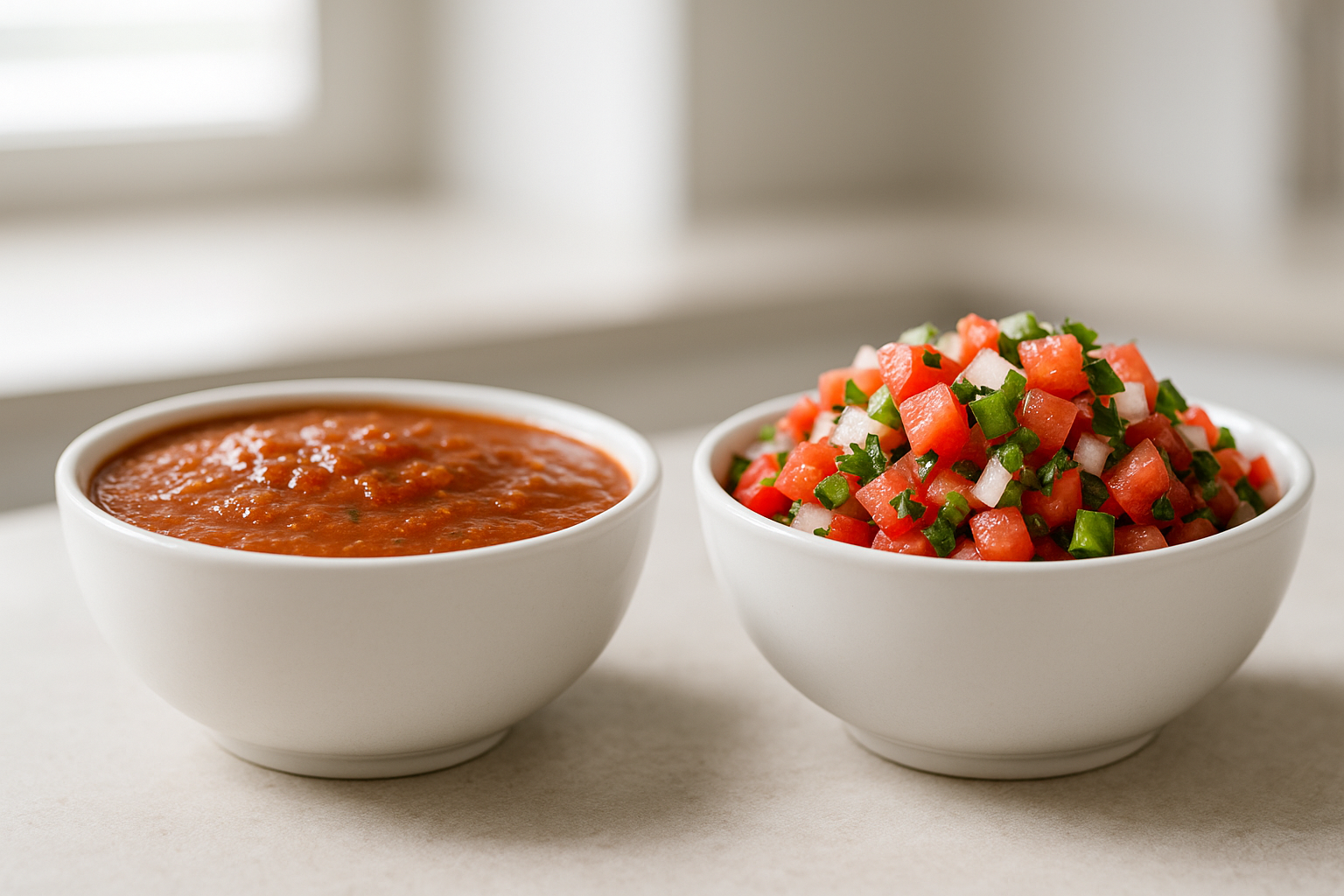
Both salsa and pico de gallo are staples in Mexican cuisine, but their differences extend far beyond texture. Salsa, meaning “sauce” in Spanish, refers to a broad category of liquid or semi-liquid condiments, which can be cooked or raw, smooth or chunky. Pico de gallo, also known as salsa fresca or salsa cruda, is a specific kind of salsa that’s always fresh, uncooked, and characterized by its chopped, distinct ingredients.
Understanding these distinctions is essential for home cooks aiming to maximize flavor and texture in their dishes. Choosing between salsa and pico de gallo depends on the desired flavor intensity, moisture level, and presentation.
Salsa vs. Pico de Gallo: Key Differences
Texture and Consistency
Salsa typically has a thinner, saucier consistency. It is made by blending or processing ingredients, resulting in a smooth or semi-chunky sauce that coats food evenly. Many salsas are cooked, which deepens flavors and softens the mixture. For example, Authentic Mexican Salsa Roja is simmered to meld flavors, then blended for a pourable texture.
Pico de gallo is always served raw and remains chunky. The ingredients - tomatoes, onions, chiles, cilantro, and lime juice - are diced uniformly and mixed, resulting in a salad-like texture where every bite includes distinct, crisp elements.
Preparation Methods
- Salsa: Can be raw or cooked. Cooking typically involves simmering tomatoes, chiles, and aromatics at 180-200°F (82-93°C) for 15-30 minutes, then blending. Roasting adds depth; tomatoes and peppers roasted at 450°F (232°C) for 20 minutes yield a smoky salsa.
- Pico de gallo: No cooking required. Ingredients are chopped and combined, then rested for 15-30 minutes to allow flavors to meld. This rest time is crucial for salt and lime juice to draw out moisture and balance acidity.
Flavor Profile
Cooked salsas develop deeper, more mellow flavors. Acidity is rounded off, and sweetness from tomatoes intensifies. Raw salsas and pico de gallo offer bright, crisp, and punchy notes, emphasizing fresh herb and chile flavors. The lime and raw onion in pico de gallo create a sharp, refreshing bite, while salsa’s flavors are often more integrated and less assertive.
Appearance and Shelf Life
- Salsa: Often red or green, depending on tomato or tomatillo base. Smooth or slightly chunky, it can be refrigerated for up to 5 days. Cooked salsas can be canned for longer storage; see How to Can Sauces Safely at Home for techniques.
- Pico de gallo: Colorful mix of red, green, and white. Best consumed within 1-2 days, as the raw vegetables quickly lose texture and become watery.
Best Uses for Salsa and Pico de Gallo
When to Use Salsa
- As a dip: Serve with tortilla chips. Its smoothness allows for easy scooping and coating.
- On tacos and burritos: Adds moisture and flavor to meats, beans, and rice. Its saucy consistency helps bind fillings.
- For braising: Use as a cooking liquid for chicken, pork, or beef. Simmer at 325°F (163°C) for 1-2 hours for tender, flavorful results.
- As a topping: Drizzle over eggs, grilled vegetables, or rice bowls for a flavor boost. For more sauce ideas, see Best Sauces for Rice: 13 Flavorful Pairings From Around the World.
When to Use Pico de Gallo
- As a fresh topping: Sprinkle over tacos, tostadas, or grilled meats to add crunch and brightness just before serving.
- On salads and bowls: Use as a fresh salsa alternative to boost flavor without adding liquid.
- With eggs: Top scrambled eggs or omelets for a vibrant, healthy garnish.
- On grilled fish or chicken: The acid and freshness cut through richness. For more grilled pairings, check Best Sauces for Grilled Fish: 12 Pairings for Every Type of Seafood.
Pairing with Other Sauces
Salsa and pico de gallo can be paired with a range of global sauces for creative fusion dishes. For instance, a dollop of Creamy Jalapeño Cilantro Dip alongside pico de gallo creates a contrast of creamy and crisp on tacos. Salsa pairs well with smoky BBQ sauces like Homemade Kansas City-Style BBQ Sauce for Tex-Mex barbecue fusion.
How to Make Classic Salsa
Ingredients and Measurements
- 1 ½ pounds (700g) ripe tomatoes, cored and quartered
- 1 medium white onion, quartered
- 2-3 jalapeño or serrano chiles, stemmed (seeds removed for less heat)
- 2 cloves garlic, peeled
- ½ cup (15g) fresh cilantro leaves
- 1 ½ teaspoons kosher salt
- 1 tablespoon fresh lime juice
Step-by-Step Instructions
- Roast (Optional): For deeper flavor, roast tomatoes, onions, and chiles on a baking sheet at 450°F (232°C) for 20 minutes, flipping once. Let cool slightly.
- Blend: Place roasted or raw ingredients (except cilantro and lime juice) in a blender or food processor. Pulse 8-10 times for a chunky salsa or blend for 30 seconds for a smooth texture.
- Finish: Add cilantro and lime juice. Pulse a few times to combine. Taste and adjust salt or acid as needed.
- Chill: Refrigerate for at least 1 hour for best flavor integration. Salsa will keep, covered, in the fridge for up to 5 days.
For a cooked salsa, simmer blended ingredients in a saucepan over medium heat (simmering at 185°F/85°C) for 15 minutes. Cool before serving. This method is similar to Authentic Mexican Salsa Roja, which uses fire-roasted tomatoes and dried chiles for complexity.
Expert Tips for Salsa Success
- Balancing acidity: If salsa tastes flat, add lime juice ½ teaspoon at a time. If too acidic, stir in ¼ teaspoon sugar.
- Fixing watery salsa: Drain excess liquid through a fine-mesh sieve, or reduce on the stovetop over medium heat for 5-10 minutes.
- Texture control: Pulse, don’t puree, for chunkier salsa. For silky smoothness, blend fully and strain using tips from How to Strain Sauces Like a Pro.
- Heat adjustment: Use more or fewer chiles; include seeds for extra spice.
For a twist, try roasted poblano or tomatillo salsas like Thermomix Creamy Roasted Poblano Sauce or green salsas - see How to Make Salsa Verde: Mexico’s Tangy Green Sauce Step-by-Step.
How to Make Authentic Pico de Gallo
Ingredients and Measurements
- 4 medium ripe Roma tomatoes (about 1 pound/450g), seeded and diced small
- ½ medium white onion, diced fine
- 1-2 jalapeño or serrano chiles, minced (remove seeds for less heat)
- ½ cup (15g) fresh cilantro leaves, chopped
- 2 tablespoons fresh lime juice
- ¾ teaspoon kosher salt
Step-by-Step Instructions
- Prep vegetables: Dice tomatoes and onion to ¼-inch pieces for even distribution and optimal texture.
- Mix: In a bowl, combine tomatoes, onion, chiles, cilantro, lime juice, and salt. Stir gently to avoid bruising tomatoes.
- Rest: Let sit at room temperature for 15-30 minutes. This draws out moisture, melds flavors, and slightly softens the onion and chile.
- Serve: Taste and adjust salt or lime juice. Serve immediately or refrigerate for up to 24 hours; excess liquid may be drained before serving.
Expert Tips for Pico de Gallo Perfection
- Seed tomatoes: Removing seeds prevents watery pico de gallo and concentrates flavor.
- Onion preparation: If raw onions are too sharp, soak in cold water for 10 minutes; drain and pat dry before adding.
- Salt at the right time: Add salt just before serving if making ahead, as salt draws out liquid and can make the mixture soggy.
- Uniform chopping: Consistent dice ensures balanced flavor in every bite.
Pico de gallo is a classic example of a No-Cook Sauce. For other uncooked condiment ideas, explore Authentic Peruvian Aji Verde Sauce or Authentic Indian Mint Chutney (Hari Chutney).
Common Questions and Problems
How Do I Prevent Watery Salsa or Pico de Gallo?
For salsa, simmer on the stove to evaporate excess water, or pulse less in the blender. For pico de gallo, seed tomatoes and salt just before serving. Drain any liquid that accumulates before serving.
How Can I Store Leftovers?
- Salsa: Store in an airtight container in the fridge for up to 5 days. For longer storage, use canning or pasteurization; see How to Pasteurize Homemade Sauces for Longer Shelf Life at Home.
- Pico de gallo: Best eaten fresh, but can be refrigerated for up to 24 hours. Stir before serving and drain excess liquid.
How Can I Adjust the Heat Level?
Reduce heat by using fewer chiles or removing seeds and membranes. To increase heat, include seeds or switch to hotter peppers like serrano or habanero (use gloves when handling hot chiles to avoid irritation).
What Are Some Fusion Ideas?
Mix pico de gallo with diced mango or pineapple for a sweet-spicy salsa. Add roasted corn or black beans for heartiness. Try pairing Mexican salsas with international sauces like Authentic Romesco Sauce for grilled vegetables or Authentic Italian Salsa Verde Sauce over grilled meats.
Advanced Tips: Texture, Acid, and Storage
Perfecting Texture
For salsa, control texture by adjusting blending time and straining through a chinois or fine-mesh sieve. For pico de gallo, uniform chopping and correct resting time are key. Avoid overmixing; gentle folding preserves clean separation of ingredients.
Acid Balance
Lime juice is critical for both salsa and pico de gallo. For optimal balance, add lime juice in small increments and taste after each addition. Acid brightens flavors but can overpower if overused. If your sauce tastes harsh, add a pinch of sugar to round out sharpness.
Storage and Serving Temperatures
- Chill salsa at 38-40°F (3-4°C) for optimal freshness. Serve cold or at room temperature.
- Pico de gallo should be served within 2 hours of preparation for maximum crunch and brightness. If storing, keep tightly covered in the fridge and drain any accumulated liquid before serving.
If making large batches, consider freezing only cooked salsas. Pico de gallo’s fresh texture does not survive freezing; see Freezing Sauces 101 for more details.
Conclusion: Choosing the Right Sauce for Every Occasion
Salsa and pico de gallo deliver distinct experiences: salsa offers a saucy, versatile condiment for dipping and saucing, while pico de gallo provides fresh, crisp bursts of flavor as a topping. Mastering both will expand your sauce repertoire and enhance Mexican, Tex-Mex, and fusion dishes. For more inspiration, try combining these classics with sauces like Copycat Freddy's Fry Sauce or Creamy Avocado Cilantro Lime Dressing for bold new flavors.
For more sauce mastery, explore guides like How to Reduce Sauces for Maximum Flavor and Best Sauces for Pork: 12 Easy Pairings for Chops, Tenderloin, and More - and bring out the best in every meal.
TAGS
Related Articles
Worcestershire Sauce vs. Soy Sauce: Flavor, Uses, and Substitutes Compared
Compare Worcestershire sauce and soy sauce—flavor, cooking uses, substitutes, and when to use each for the best results in your recipes.
Tahini Sauce vs. Hummus: Flavor, Texture, and How to Use Each Best
Tahini sauce and hummus are staple Mediterranean condiments. Compare flavor, texture, nutrition, and best uses for each in your cooking.
Pesto vs. Chimichurri: Comparing Herb Sauces for Pasta, Meat, and More
Pesto and chimichurri are bright, herbal sauces with different uses. Learn differences, best pairings, and how to choose the right one for your dish.
Aioli vs. Garlic Mayo: What’s the Real Difference in These Creamy Sauces?
Discover how aioli and garlic mayo differ in ingredients, flavor, and uses. Learn when to use each sauce for the perfect creamy, garlicky kick.