How to Deglaze for Pan Sauces: Step-by-Step Guide to Rich, Flavorful Results
Master deglazing for pan sauces with this step-by-step guide. Learn the best liquids, timing, and techniques for restaurant-quality sauces at home.
Written by FoodieManiac
With over 8 years of sauce-making experience, I've tested hundreds of techniques and products to bring you practical, reliable advice. Learn more about me →
Why Deglazing Is Essential for Pan Sauces
Deglazing is a core technique for building rich, layered flavors in pan sauces. When you cook proteins (like chicken, steak, or pork) over high heat, a golden-brown layer of caramelized bits—called fond—forms on the bottom of the pan. These browned bits contain concentrated flavor compounds. Deglazing lifts the fond using a liquid, dissolving it into a base for your sauce. Skipping this step means leaving the most flavorful part of your meal behind.
Whether you want to create a classic pan sauce for steak, or riff on global flavors like Aji Verde or Chimichurri, mastering deglazing is the first step to sauce success.
What You Need for Deglazing
- Heavy-bottomed pan: Stainless steel or cast iron is ideal. Nonstick pans don’t build a good fond.
- High-heat spatula or wooden spoon: For scraping up the fond.
- Deglazing liquid: Wine, stock, broth, vinegar, water, or even spirits like bourbon. Avoid sugary liquids that could burn.
For a classic pan sauce, use 1/2 to 3/4 cup of deglazing liquid for every 2-4 servings. Reduce by half for concentrated flavor. Always have your liquid measured and ready—deglazing happens fast, usually within 30-60 seconds.
Step-by-Step: How to Deglaze for Pan Sauces
1. Sear Your Protein and Build the Fond
Heat your stainless steel or cast iron pan over medium-high (400-450°F/200-230°C). Add 1-2 tablespoons of neutral oil. Pat your protein dry and season well. Sear undisturbed until a deep golden crust forms—3-5 minutes per side for steaks or chicken breasts. Don’t move the protein early; fond forms best with direct contact. For thin cuts, use a shorter sear (2-3 minutes).
Transfer the cooked protein to a warm plate and tent with foil. Keep the heat on—do not clean the pan.
2. Remove Excess Fat (If Needed)
If there’s more than 1-2 tablespoons of fat left in the pan, pour off the excess, keeping just enough to sauté aromatics. Too much fat will make your sauce greasy and can prevent deglazing liquid from reaching the fond.
3. Sauté Aromatics (Optional, but Powerful)
Lower heat to medium (350°F/175°C). Add finely chopped shallots, onions, or garlic (1-2 tablespoons). Sauté for 30-60 seconds until fragrant, scraping occasionally. This step builds complexity for your sauce base.
4. Deglaze: Add the Liquid
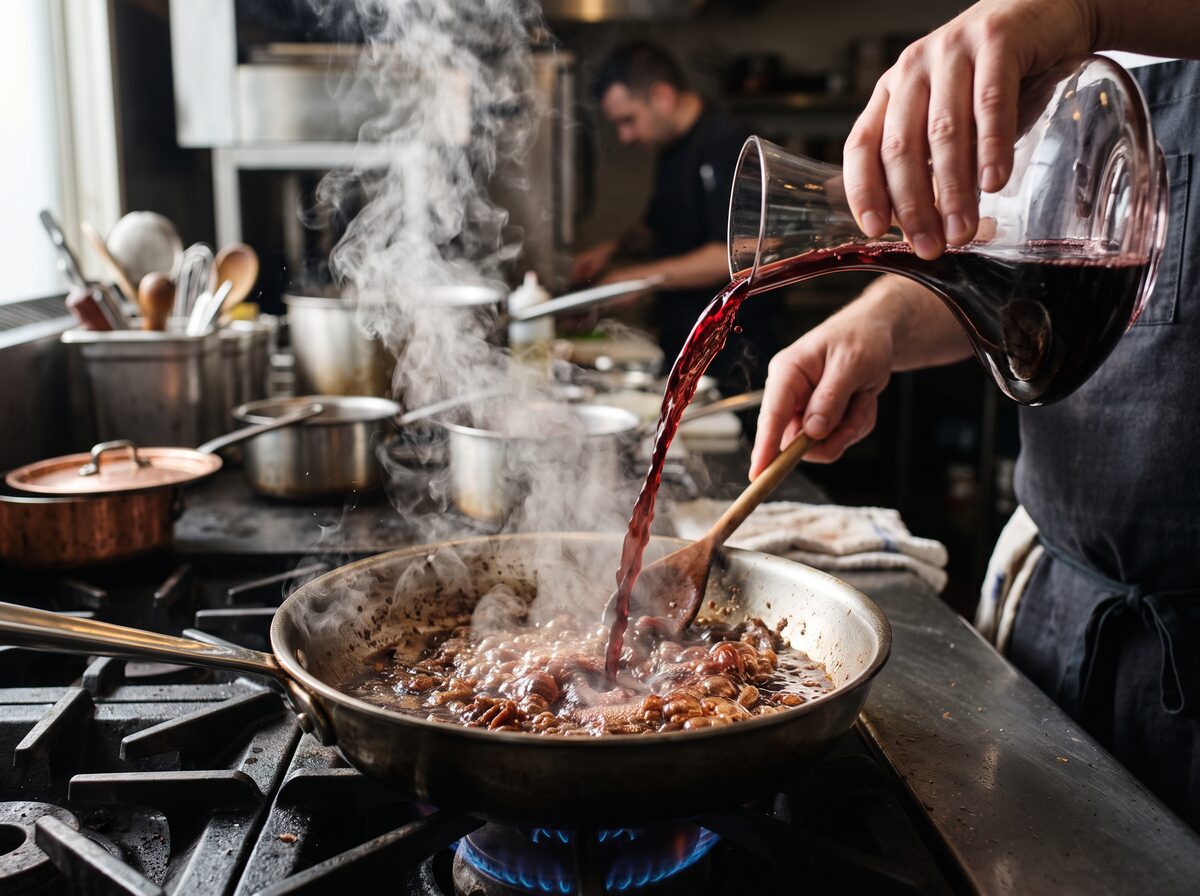
Turn the heat back to medium-high. Pour in 1/2 cup of your chosen deglazing liquid. The pan will sizzle and steam immediately. Using a wooden spoon or spatula, scrape the pan bottom to loosen all fond. Keep scraping until the fond is fully dissolved (about 30 seconds).
- For wine or spirits: Let them bubble for 1-2 minutes to cook off alcohol. For bourbon, tilt the pan away from you when adding to avoid flare-ups.
- For stock or broth: Add and reduce by half over 2-3 minutes for a more concentrated flavor.
5. Reduce and Build the Sauce
Let the liquid simmer vigorously. This reduction step is crucial: flavors concentrate and the sauce thickens. For most pan sauces, reduce the liquid by at least half (from 1/2 cup to 1/4 cup) over medium-high heat. This usually takes 2-4 minutes. Stir frequently to prevent burning.
For extra body, swirl in 1-2 tablespoons of cold butter off the heat, or whisk in 1 tablespoon of cream for a richer finish. These enrichers create a glossy, velvety texture.
6. Season and Finish
Taste your sauce. Add salt, pepper, and a splash of acid (like lemon juice or vinegar) to brighten flavors. Strain through a fine mesh sieve for ultra-smooth results, or leave as is for a rustic finish. Spoon the sauce over your rested protein and serve immediately.
Deglazing Liquids: What Works and When to Use Them
- Dry white wine: Pairs with chicken, pork, seafood. Use 1/2 cup and reduce by half.
- Red wine: Ideal for steak, lamb, or duck. Use 1/2 cup, reduce to 1/4 cup.
- Stock or broth: Use for any protein. Chicken or beef stock adds savoriness; use 1/2 cup per pan.
- Bourbon or whiskey: Great for glazes, like in our Spicy Maple Bourbon Glaze. Use 1/4 cup, simmer to cook off alcohol.
- Vinegar or citrus juice: Adds brightness—use sparingly (2-3 tablespoons), especially for pan sauces with rich meats.
- Water: Works in a pinch, but lacks depth.
For more options and expert tips on fast, flavorful sauces, see our guide: How to Make 3-Ingredient Sauces in Under 5 Minutes.
Common Deglazing Mistakes (And How to Avoid Them)
- Not enough fond: If the pan is too cool, or you moved the protein too often, fond won’t develop. Always preheat and don’t crowd the pan.
- Pan too hot: Burnt fond tastes bitter and ruins the sauce. Use medium-high, not maximum, heat.
- Wrong pan: Nonstick pans don’t form fond properly. Use stainless steel or cast iron.
- Too much fat: Excess fat prevents the deglazing liquid from contacting fond. Pour off all but 1-2 tablespoons before adding liquid.
- Not reducing enough: Watery sauce lacks flavor. Simmer until reduced by at least half for concentrated taste and better texture.
- Overseasoning early: Salt after reducing, since reduction intensifies saltiness.
For more troubleshooting, read Why Your Homemade Gravy Turns Lumpy: Common Causes and Easy Fixes and Why Your Stir-Fry Sauce Turns Watery - Easy Fixes for Thick, Glossy Results.
Advanced Tips for Perfect Pan Sauces
- Layer flavors: After deglazing, add a sprig of thyme, rosemary, or a bay leaf while reducing. Remove before serving.
- Enrich with butter: Off the heat, swirl in cold butter, 1 tablespoon at a time. This “monter au beurre” technique creates a silky sauce.
- Finish with acid: A teaspoon of vinegar or a squeeze of lemon juice balances richness and brightens the entire sauce.
- Add mustards or jams: For depth, whisk in 1 teaspoon of Dijon mustard or a fruit jam after reducing. This technique is featured in many modern pan sauces and can be adapted for glazes like our Spicy Maple Sriracha BBQ Sauce.
- Strain for elegance: Use a fine mesh sieve to remove any bits and yield a restaurant-level sauce.
To see how deglazing forms the backbone of a sauce, check out our step-by-step guide How to Deglaze Like a Chef: Essential Technique for Flavorful Pan Sauces and Deglazing Demystified: How to Build Deep Flavor in Pan Sauces.
Classic Pan Sauce Formula (With Measurements)
- After searing: Remove protein, pour off all but 1 tablespoon fat.
- Add 1-2 tablespoons minced shallot or onion, sauté 30 seconds.
- Add 1/2 cup dry wine, stock, or other deglazing liquid. Scrape up fond.
- Simmer and reduce by half (to 1/4 cup), 2-4 minutes.
- Swirl in 1-2 tablespoons cold butter off heat.
- Season with salt, pepper, and a splash of acid.
- Strain if desired, then spoon over rested meat.
Deglazing: Beyond Meat—Vegetarian and Vegan Pan Sauces
Deglazing isn’t just for meat. When roasting or sautéing vegetables at high heat, you also get caramelized bits on the pan. After cooking, use vegetable broth, wine, or even water to deglaze. Then enrich with vegan butter or olive oil. Try deglazing after roasting beets for our Thermomix Creamy Roasted Beetroot & Horseradish Dip or for building flavor in dips like Creamy Jalapeño Cilantro Dip (Chuy’s Copycat).
Pairing Pan Sauces With Other Sauces and Dips
Pan sauces are highly customizable. You can layer in flavors from other sauces, or serve them alongside. For example, a deglazed bourbon glaze pairs beautifully with grilled meats and a side of Homemade Chimichurri Sauce for Grilled Meats or contrasts with creamy dips like Creamy Sriracha Mayo Sauce. Experiment with combinations to discover your signature pairing. If you want more pairing ideas, don’t miss our guide: How to Pair Sauces With Grains: Perfect Matches for Rice, Quinoa, and More.
Safety and Storage Tips
- Simmer sauces thoroughly: If you use wine or spirits, simmer for at least 2 minutes to cook off alcohol.
- Serve immediately: Pan sauces are best served hot and fresh. If you need to hold the sauce, keep it warm over very low heat (<110°F/43°C), stirring occasionally.
- Freezing: Most pan sauces don’t freeze well due to butter or cream. For best results, prepare fresh. For more on freezing, see Freezing Sauces 101: Best Sauces to Freeze and How to Thaw Them Safely.
Conclusion: Unlock Richer, More Flavorful Meals
Deglazing is the professional’s shortcut to restaurant-quality sauces at home. Using the right pan, high heat, and the right liquid, you can turn everyday meals into memorable dishes. Remember: sear hard, deglaze fast, reduce well, and finish with bold flavor. Then explore, taste, and tweak—just as you would with globally-inspired sauces like Authentic Moroccan Chermoula or Creamy Roasted Jalapeño Ranch Dip. Once you master deglazing, every meal can end with a sauce worth savoring.
TAGS
Related Articles
Freezing Sauces 101: Best Sauces to Freeze and How to Thaw Them Safely
Discover which sauces freeze well, step-by-step freezing methods, and how to safely thaw for best flavor and texture. Preserve your homemade sauces longer.
How to Freeze Sauces for Maximum Freshness: Methods, Tips, and Mistakes to Avoid
Learn the best techniques to freeze sauces, dressings, and dips. Discover which sauces freeze well, storage tips, and how to thaw for best results.
Freezing Sauces 101: Best Methods for Preserving Flavor and Texture
Learn how to freeze sauces the right way—tips for creamy, tomato, and herb sauces plus thawing tricks to maintain taste and texture.
How to Deglaze Like a Pro: Unlocking Deep Flavor for Restaurant-Quality Sauces
Master deglazing to build rich, complex sauces at home. Step-by-step techniques, liquid choices, and chef tips for pro-level flavor every time.