Why Your Homemade Thai Peanut Sauce Turns Out Too Thick or Gloopy
Struggling with Thai peanut sauce that's too thick? Learn why it happens and simple tricks to fix texture for smooth, pourable, and authentic results.
Written by FoodieManiac
With over 8 years of sauce-making experience, I've tested hundreds of techniques and products to bring you practical, reliable advice. Learn more about me →
Why Does Thai Peanut Sauce Always Go Weird On Me?
If you’ve ever tried to make Thai peanut sauce at home and ended up with a bowl of cement instead of that glossy, pourable magic you get at restaurants, you are not alone. I’ve made so many gloopy, mouth-coating messes that I almost gave up and just bought the bottled stuff. But homemade really is better – when you get it right. The problem? This sauce is weirdly easy to mess up. Let me walk you through what actually goes wrong, how to fix it, and why your sauce keeps turning out way too thick.
What Makes Thai Peanut Sauce So Tricky?
This sauce seems like it should be simple. It’s just peanut butter, coconut milk, soy sauce, and some sweet and spicy stuff, right? But the tricky part is getting the consistency right. It goes from runny to gluey in a heartbeat. If you’ve ever tried to thin it with water and ended up with something that still won’t pour (or, even worse, splits), you know what I mean.
Most recipes out there just say “add water until you get the right consistency.” Okay, but how much? And why does it sometimes seize up no matter what? I’ve ruined enough batches to figure out what actually causes the gloopiness.
Common Culprits: Why Peanut Sauce Gets Too Thick or Gloopy
- Too much peanut butter: Peanut butter is a thickener. It’ll take over if you don’t balance it out.
- Low-quality (or wrong style) peanut butter: Natural peanut butters (the kind with just peanuts and salt) behave differently than the “stabilized” stuff. Some brands are drier than others. I’ll explain how to deal with both.
- Not enough liquid (or the wrong liquid): Coconut milk is thick. You need enough water (or lime juice, or vinegar) to keep things moving.
- Heating too fast or too long: Peanut sauce thickens a lot as it cooks and even more as it cools. Overheat it and you’ll end up with a paste.
- Skipping the sugar: Sugar actually helps with texture. Leave it out and your sauce can seize up.
Let's Break Down The Ingredients
Here’s what’s usually in Thai peanut sauce – and what each ingredient actually does for the texture:
- Peanut butter: The main thickener. Also the main culprit for gloopiness if you use too much. I start with 1/3 cup per cup of liquid, then add more if needed.
- Coconut milk: Adds creaminess, but is surprisingly thick, especially if you use the full-fat canned stuff. Light coconut milk or even a mix of coconut milk and water gives you more control.
- Soy sauce/fish sauce: Adds salt and umami, but also thins the sauce. Don’t just dump it in – start with 2 tablespoons of soy sauce per batch, then adjust.
- Sugar or honey: Adds sweetness, but also gives the sauce some gloss. I use 1 tablespoon brown sugar as a starting point.
- Acid (lime juice, rice vinegar): Brightens things up and helps thin the sauce. I always squeeze in half a lime and taste. A little goes a long way.
- Chili paste or Sriracha: For heat, which doesn’t affect texture much, but the moisture helps.
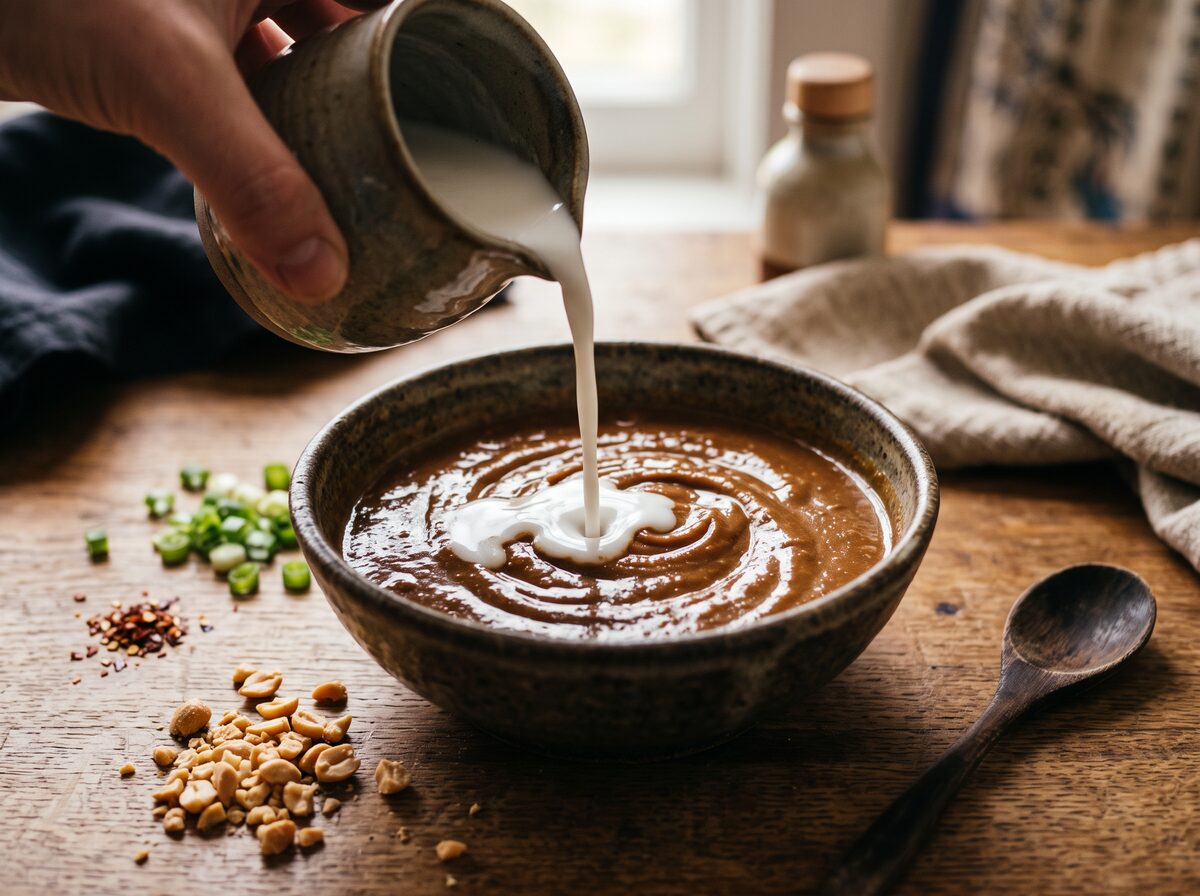
- Water: The magic fixer. If your sauce is thick, add water a tablespoon at a time. It’s the only way to rescue a paste turned sauce.
My Peanut Sauce Fails (And What I Learned)
The first time I tried to make peanut sauce, I dumped everything in a saucepan and heated it over medium. It turned into something closer to peanut fudge than sauce. I tried to thin it with water, but it just separated and looked gross. That batch went straight in the trash. The second time, I tried a blender instead of the stove, and it worked way better. But it was still too thick after it sat for 10 minutes.
What I finally learned: you have to adjust the liquid at the end, after the sauce cools a bit. It will thicken a lot as it sits. Always err on the side of too thin before you serve, because it sets up fast. And don’t be afraid to use water. Coconut milk alone just isn’t enough.
How to Actually Get the Sauce Right
Here’s my go-to method now (after way too many failures):
- Combine equal parts coconut milk and water in a small saucepan. I do 1/2 cup coconut milk + 1/2 cup water for a decent-sized batch.
- Add 1/3 cup peanut butter (smooth or crunchy, natural or not is fine - just avoid super dry brands).
- Whisk over low heat until fully combined. Don’t let it boil. If you see bubbles, turn it down.
- Add 2 tablespoons soy sauce, 1 tablespoon brown sugar, 1 tablespoon rice vinegar, and 1 tablespoon Sriracha or chili paste. Whisk again.
- Once it looks smooth, take it off the heat and let it sit for 5 minutes. It will thicken as it cools.
- Taste and adjust. Now’s when I add more water (1 tablespoon at a time) until it’s pourable but not watery. Usually I end up adding 2-3 tablespoons.
- Squeeze in the juice of half a lime. Taste. Add a pinch of salt if it needs it (start with 1/4 tsp – you can always add more, but you can’t un-salt your sauce).
That’s it. This method works for me every time now. And if you want something even easier, honestly, you can just whisk everything together cold and skip the heat – it’ll be smoother if you warm it, but it’s still tasty and way less risky. It’s like making my Avocado Cilantro Lime Crema – sometimes the low-tech method is just easier.
Tested Tips
- Let it cool first: If you think your sauce is the perfect texture on the stove, wait. It will thicken as it cools – always. I used to serve it too thick because I didn’t account for this. Now, I let it cool for 5 minutes, then thin with water if needed.
- Don’t overheat: I’ve scorched peanut sauce more times than I’ll admit. Keep the heat low – as soon as it starts to bubble, take it off. If it scorches, you’ll taste it, and there’s no fixing that. Wipe the pan and start over if you burn it.
- Use water, not just coconut milk: I thought using only coconut milk would make it extra silky, but it just made it heavy and weird. Water is your friend here. Add it slowly until you can almost pour the sauce off a spoon.
- Fixing a split sauce: If you add too much water and it splits, whisk in a spoonful of peanut butter (off the heat) to bring it back together. If it’s still not right, a splash of coconut milk can help.
- Natural peanut butter check: If you’re using natural peanut butter and it’s extra stiff, microwave it for 20 seconds before adding. It blends way easier and won’t clump.
- Shortcut: blender method: If you’re in a rush, just throw everything in a blender or use a stick blender. You’ll get a super smooth sauce with way less risk of scorching or seizing up. I do this when I’m making a big batch for dipping fresh rolls (and yes, store-bought peanut butter is fine – I use Jif or Skippy for this sometimes).
Ingredient Swaps and Shortcuts (What’s Worth It?)
I’ve tried all the swaps – almond butter, cashew butter, even sunflower butter when I was out of peanuts. They all work, but they all come out a little thicker than peanut butter. You’ll need more water. Thai brands of peanut butter are sometimes runnier than American ones, so if you want a truly authentic texture, you can thin American peanut butter with a little extra oil or water.
Store-bought coconut milk is 100% fine. Don’t spend extra on organic or “artisanal” stuff unless you like the taste. Light coconut milk gives you more control, but you can always just use half canned coconut milk and half water.
If you’re out of limes, a splash of rice vinegar will do the trick. Fish sauce is optional, but if you love that deep, savory funk, add a teaspoon or two. Just go slow – it’s powerful.
And don’t stress about fancy sweeteners. Brown sugar, white sugar, honey, or even maple syrup all work. I sometimes use honey for a glossier finish.
How to Store and Reheat Thai Peanut Sauce (So It Doesn’t Get Gloopy Again)
This sauce thickens up a ton in the fridge. The first time I made a big batch, I pulled it out the next day and it was basically peanut butter again. Here’s what actually works:
- Store in a sealed container in the fridge for up to a week. (It freezes, but the texture gets weird – see Freezing Sauces 101 for which sauces actually freeze well.)
- When reheating, add a splash of water or coconut milk and warm gently over low heat, whisking constantly. Don’t microwave on high – it’ll split.
- If it’s still too thick, whisk in more water, a tablespoon at a time, until it’s loose again. Taste and adjust salt or acid – cold sauces always taste duller.
- And if it turns watery after you chill it, check out Why Your Creamy Sauce Turns Watery After Refrigeration for fixes that actually work.
When Is Gloopy Actually Good?
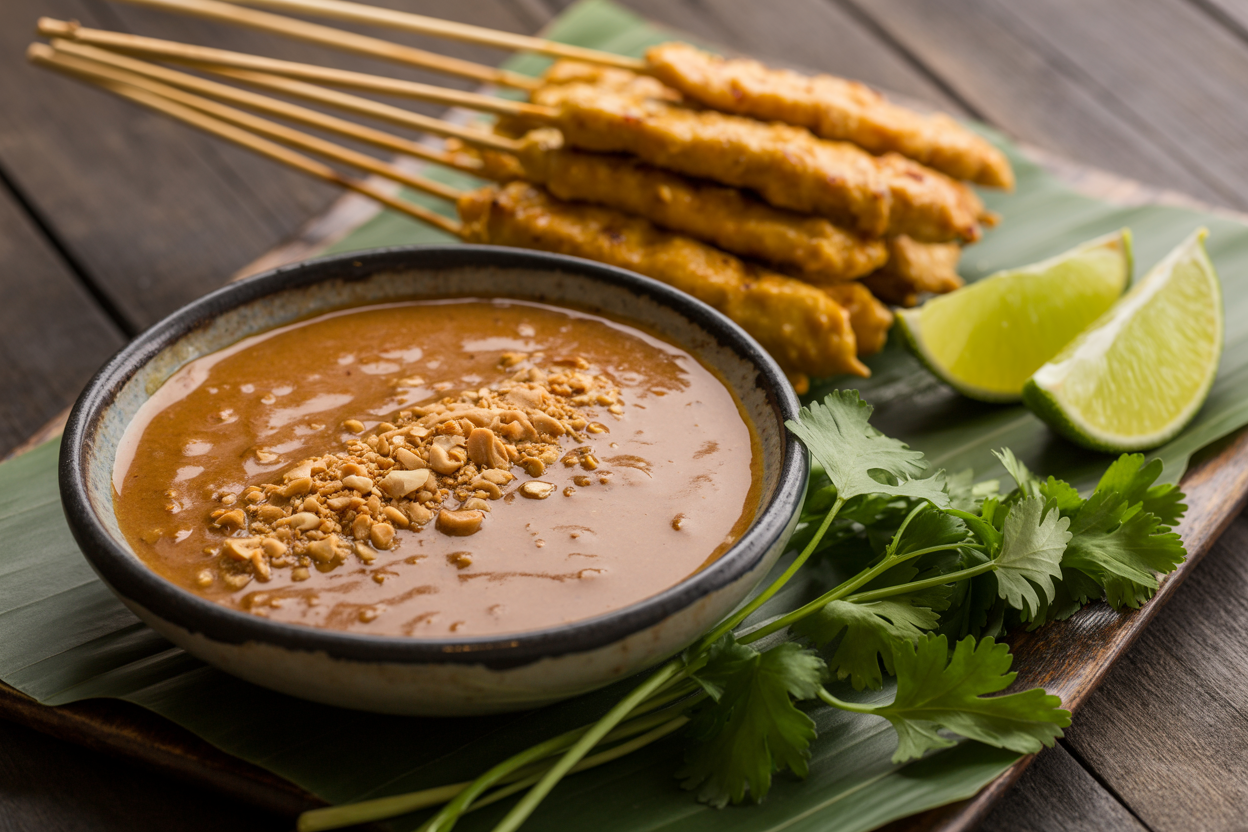
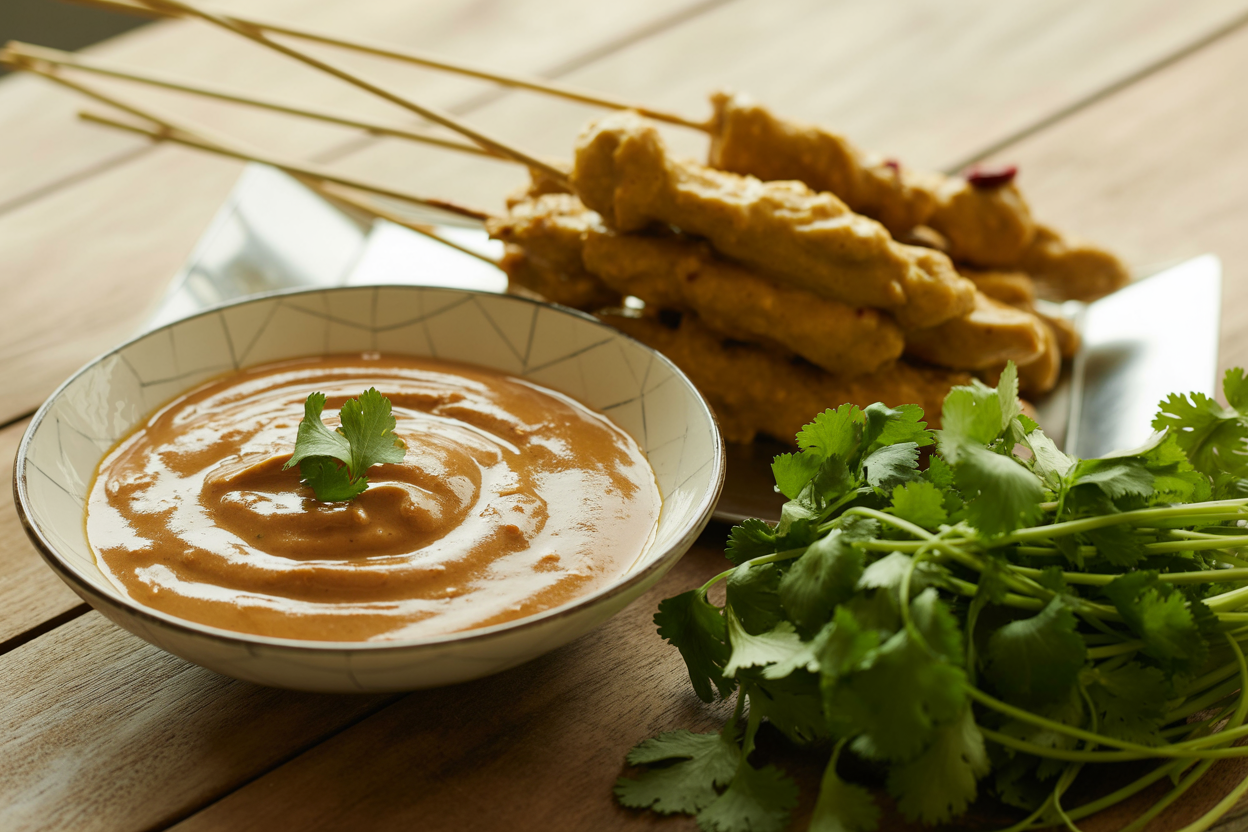
There are times when you want your peanut sauce thicker – as a dip for satay or spring rolls, for example. But if it’s so thick you can’t get it off the spoon, it’s not right. The best peanut sauce is pourable but still coats whatever you’re dipping. For noodle salads, go even thinner – the sauce will soak in and thicken up as it sits. If you’re using it as a dressing, make it a little runnier than you think you need.
And if you want to try other pourable, creamy sauces that never get gluey, check out my Thermomix Creamy Chipotle Sauce or Creamy Roasted Garlic Parmesan Dip for something a little different. Or try my Authentic Peruvian Aji Verde Sauce if you want a spicy, herby kick that never thickens up weirdly.
How to Save Your Sauce When Things Go Sideways
If you’ve already ended up with a bowl of peanut paste, don’t panic. You can usually fix it. Here’s what I do:
- Add a splash of warm water (not cold – it mixes better). Whisk hard. If it’s still too thick, add a bit more water, a tablespoon at a time.
- If it splits (looks oily or curdled), whisk in a spoonful of peanut butter off the heat. It’ll usually come back together.
- If it’s burned, you’re out of luck – there’s no saving burnt peanut sauce. Just start again and keep the heat lower next time.
- If it’s bland after thinning, re-season with soy sauce, lime juice, or sugar, but go slow. You can always add more.
For more on saving split or separated sauces, check out my guide on Why Your Quick Creamy Sauces Separate and How to Fix It Fast – these tricks work for peanut sauce too.
Final Thoughts: Embrace the Imperfect Sauce
Even after making thousands of sauces, I still have batches that come out too thick or too thin. That’s normal. The key is not to panic and know you can almost always rescue it. Add water slowly, whisk hard, and taste as you go. Don’t get hung up on perfection – the homemade version is always going to taste better than the bottled stuff, even if it’s a little rustic.
If you want to keep learning about what makes sauces work (and what makes them fail), I highly recommend reading Why Your Creamy Sauce Turns Watery After Refrigeration and Why Your Sauce Tastes Metallic: Causes and Easy Fixes for Home Cooks. And if you’re looking for more killer sauces to try, my Thermomix Creamy Sun-Dried Tomato Basil Sauce is one of my most foolproof pourable sauces ever.
Good luck – and remember, even the gloopy batches are delicious on noodles.
TAGS
Try These Recipes
Related Articles
How to Make Toum: Lebanon’s Creamy Garlic Sauce and Serving Ideas
Master Lebanese toum sauce at home with this step-by-step recipe. Learn tips for perfect texture and delicious ways to use this garlicky condiment.
10-Minute Marinades: Quick Sauces to Instantly Upgrade Any Protein
Discover fast, flavor-packed marinades you can whip up in 10 minutes to transform chicken, beef, fish, or tofu. Easy recipes, bold results!
Tahini Sauce vs. Hummus: Differences, Uses, and When to Choose Each
Compare tahini sauce and hummus: key ingredients, texture, flavor, and best uses. Learn when to use each Middle Eastern classic in your cooking.
Best Sauces for Grilled Vegetables: 10 Pairings That Add Bold Flavor
Discover 10 delicious sauces that perfectly complement grilled vegetables. Elevate your summer grilling with these easy, flavor-packed pairings and recipes.